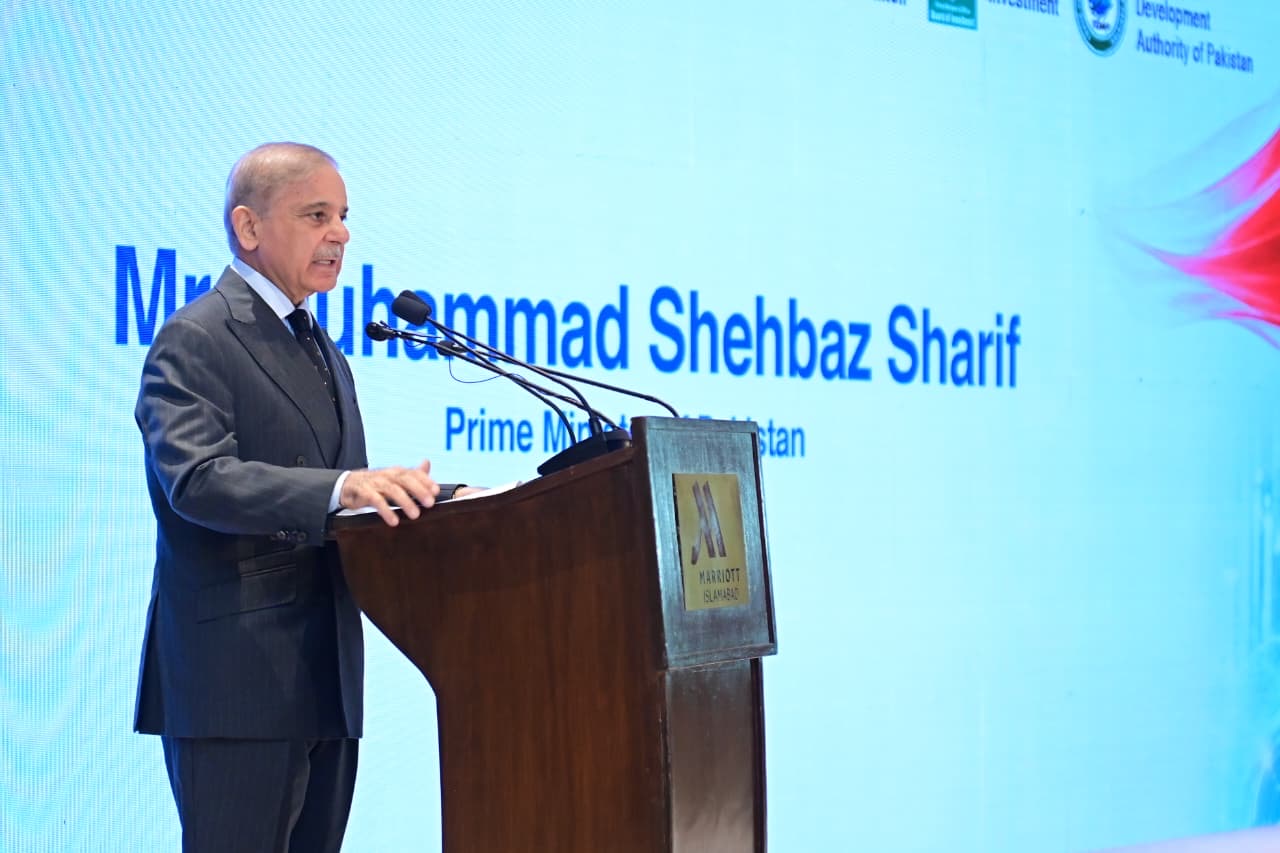
Islamabad, July 17, 2026(Kamran Raja): Prime Minister Muhammad Shehbaz Sharif on Friday welcomed the signing of nine agreements worth more than US$440 million between Pakistani and Chinese pharmaceutical companies, describing them as a major milestone that will accelerate the growth of Pakistan’s pharmaceutical and biotechnology sectors through enhanced private-sector collaboration.
Addressing the Pakistan-China Pharmaceutical Business-to-Business (B2B) Conference in Islamabad, the Prime Minister said the agreements reflect the deepening economic partnership between the two countries and reaffirm China’s position as Pakistan’s most trusted and time-tested friend.
The conference was attended by federal ministers, special assistants, senior government officials, the Chinese Ambassador to Pakistan, and representatives of leading pharmaceutical companies from both Pakistan and China.
The Prime Minister congratulated the business communities of both countries on successfully concluding the agreements and appreciated the efforts of the Federal Minister for National Health Services, the Special Assistant to the Prime Minister on Industries and Production, the Chinese Ambassador to Pakistan, and Pakistan’s Ambassador to China in facilitating the initiative. He expressed confidence that the agreements would soon translate into practical projects.
Highlighting the strength of Pakistan-China relations, Prime Minister Shehbaz Sharif said China has consistently stood by Pakistan in every challenging moment and has made a transformative contribution to the country’s economic development. He noted that under the first phase of the China-Pakistan Economic Corridor (CPEC), investments exceeding US$30 billion had significantly enhanced Pakistan’s infrastructure and energy sectors.
The Prime Minister paid tribute to Chinese President Xi Jinping, describing him as a visionary leader whose leadership has transformed China into a global economic and strategic power. He also praised the dedication of the Chinese people in advancing education, scientific research, innovation, and technological development.
Underscoring the importance of collaboration in the healthcare sector, the Prime Minister said the newly signed agreements would promote joint manufacturing, vaccine production, biotechnology, research and development, technology transfer, and pharmaceutical innovation, creating new opportunities for both countries.
Referring to recent regional developments, Prime Minister Shehbaz Sharif said Pakistan played an important mediating role in facilitating dialogue between the United States and Iran, with valuable support from China and other friendly countries. He thanked President Xi Jinping for his sincere backing of these peace efforts and noted that Pakistan had served as the mediator in the “Islamabad Memorandum of Understanding” concluded between the two sides.
The Prime Minister commended Field Marshal Syed Asim Munir for his tireless efforts in advancing regional peace and stability, stating that history would remember his contribution. He also acknowledged the diplomatic efforts of Deputy Prime Minister and Foreign Minister Senator Mohammad Ishaq Dar in engaging with international leadership during the process.
Reaffirming Pakistan’s commitment to protecting Chinese nationals, the Prime Minister stated that ensuring their safety remains a top priority of the Government of Pakistan.
“Chinese citizens are our valued guests. Their safety, security, and well-being are our foremost responsibility, and no effort will be spared in this regard,” he said.
Federal Minister for National Health Services Syed Mustafa Kamal said the conference reflected the Prime Minister’s vision of transforming Pakistan’s pharmaceutical industry into a globally competitive sector. He noted that the government’s coordinated approach under Prime Minister Shehbaz Sharif’s leadership had created new opportunities for international investment and industrial cooperation.
Chinese Ambassador Jiang Zaidong praised the Prime Minister’s vision for expanding business-to-business cooperation, saying the initiative had opened a new avenue for practical collaboration between the two countries. He highlighted the growing demand for healthcare services in Pakistan and noted that 29 Pakistani pharmaceutical products have already entered the Chinese market, demonstrating the expanding scope of bilateral cooperation.
The Ambassador also reaffirmed China’s continued support for Pakistan’s economic development and regional peace and stability, expressing confidence that the Pakistan-China strategic partnership would continue to grow stronger.
Special Assistant to the Prime Minister on Industries and Production Haroon Akhtar Khan said the Prime Minister’s recent visit to China had opened a new chapter in bilateral economic cooperation by creating fresh opportunities for investment, technology transfer, and industrial collaboration. He emphasized that the Government is pursuing reforms, including the National Industrial Policy and National Tariff Policy, to strengthen Pakistan’s competitiveness and create an investor-friendly environment.
During the conference, nine agreements valued at more than US$440 million were signed between Pakistani and Chinese private-sector companies. The agreements cover local vaccine manufacturing, biotechnology, pharmaceutical production, technology transfer, hepatitis prevention initiatives, and cooperation under Pakistan’s Expanded Programme on Immunization (EPI), marking a significant step toward strengthening Pakistan’s healthcare and pharmaceutical industry.