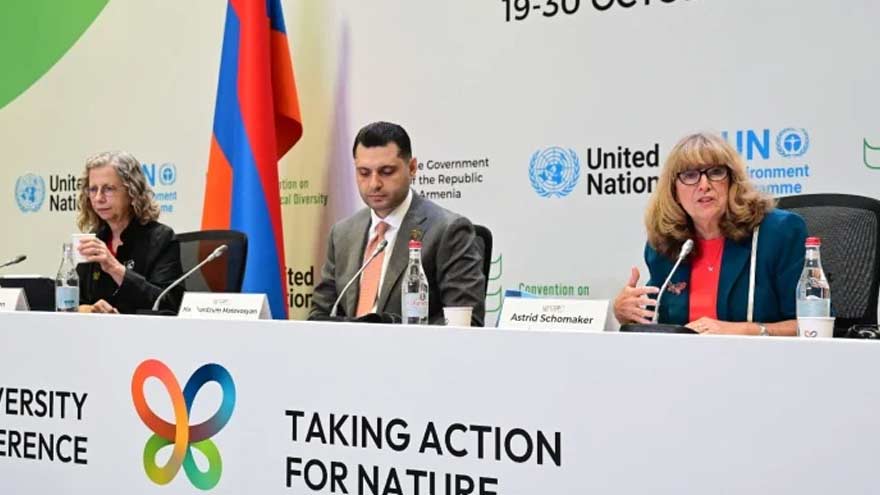
YEREVAN, 31 October, 2026 (Kamran Raja): Nearly 200 countries have reached hard-fought agreements at the United Nations biodiversity summit in Armenia, pledging renewed efforts to put global nature protection targets back on track, although the outcome has drawn criticism over limited progress on key environmental challenges. Delegates at the COP17 summit in Yerevan approved two major texts after prolonged negotiations that extended into Saturday morning, seeking to revive the landmark commitment to halt and reverse biodiversity loss by 2030. The global framework aims to protect 30 percent of the Earth’s land and oceans, tackle pollution and invasive species, and increase financial support for conservation. However, the United Nations has warned that existing efforts remain insufficient to achieve these targets. COP17 President Hambardzum Matevosyan welcomed the approval of the agreements, while French Minister for Ecological Transition Monique Barbut said the outcome fell short of what was required to address the escalating crisis facing the natural world. She warned that missed opportunities at the summit had slowed efforts to respond to biodiversity loss, stressing that nature could not wait for lengthy international negotiations. Environmental organisations described some of the decisions as a step forward, despite weaknesses in the agreed texts, particularly regarding harmful subsidies. Delegates debated financial incentives supporting activities that damage ecosystems, including fossil fuel production, intensive agriculture and overfishing. Greenpeace International said the summit had generated important political momentum to address such incentives, even though the final wording remained limited.
Disagreements over scientific evidence also complicated negotiations, with several countries accused of obstructing the approval of key scientific reports. Swiss negotiator Gabriela Blatter, speaking on behalf of dozens of countries, expressed concern over growing political challenges to scientific findings, stressing that science should not be subject to political negotiations. Financing conservation efforts remained another major point of disagreement, particularly over calls for wealthier emerging economies, including China, to contribute to global biodiversity protection. A draft proposal invited countries beyond traditional developed-country donors to voluntarily join conservation funding efforts. However, key decisions concerning the Cali Fund, a UN mechanism intended to attract billions of dollars in corporate contributions, remained unresolved. Environmental campaigners warned that delaying essential decisions for another two years could leave the fund without adequate resources. The summit also decided that Ecuador would host the next UN biodiversity conference in 2028 after defeating Panama in a secret ballot.