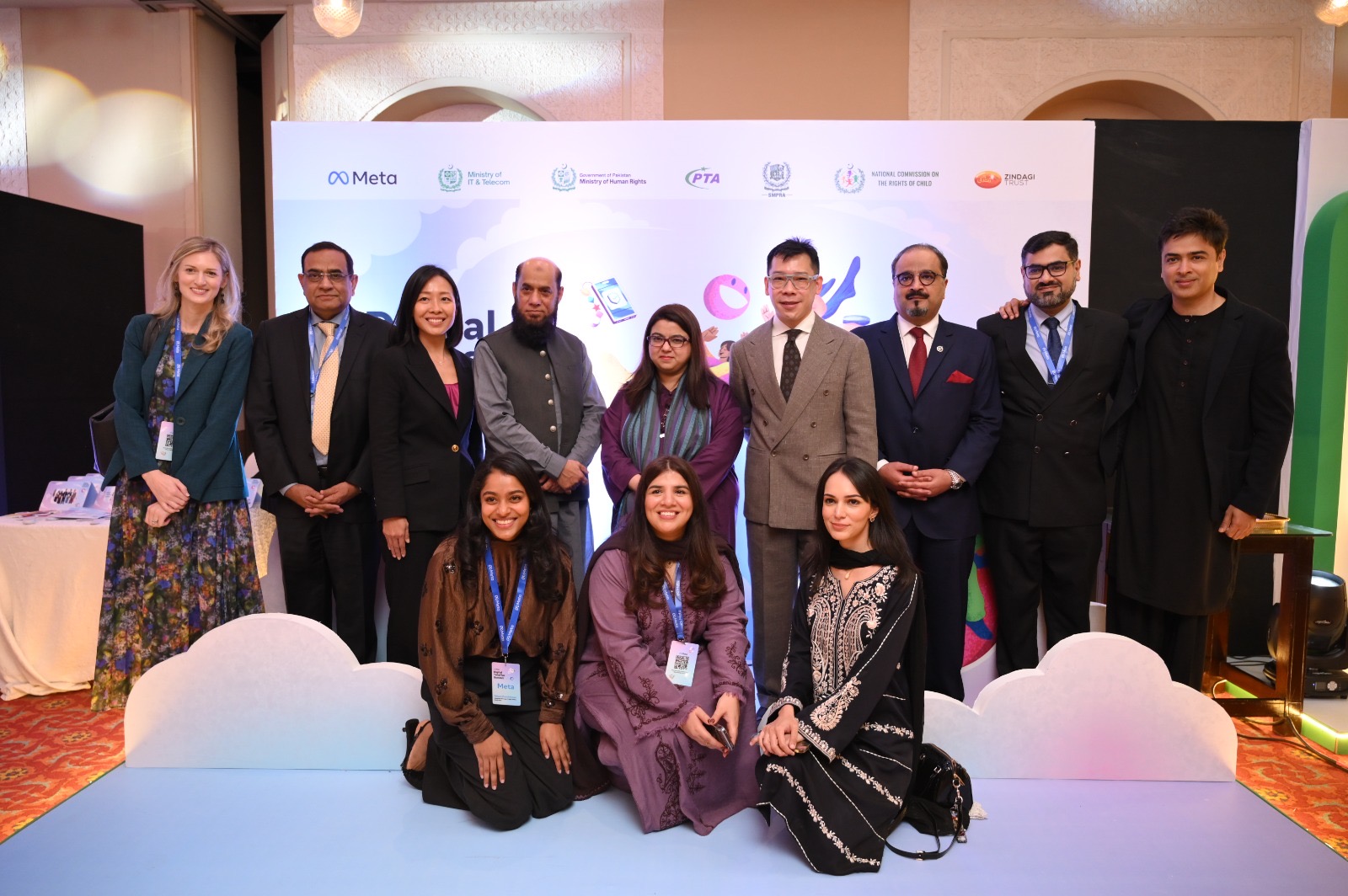
Islamabad,30 October 2026(Nosheen): Meta has convened policymakers, educators, parents, civil society representatives and digital content creators in Islamabad for its Digital Tahafuzz Summit, focusing on promoting online safety, protecting children and teenagers, and encouraging responsible use of digital platforms.
Organised in collaboration with the Ministry of Information Technology and Telecommunication, Ministry of Human Rights, Pakistan Telecommunication Authority (PTA), Social Media Protection and Regulatory Authority (SMPRA), National Commission on the Rights of Child (NCRC) and Zindagi Trust, the summit provided a platform for stakeholders to discuss practical measures to make Pakistan’s digital environment safer for younger generations.
Discussions at the event centred on strengthening online safeguards while ensuring that young people continue to benefit from digital platforms. Participants highlighted the importance of privacy protection, age-appropriate content, safer platform design and default security measures.
The summit also explored the development of a practical and privacy-conscious age-assurance framework for Pakistan, stressing the need to combine technological protections with digital education and parental guidance. Speakers underscored that children and teenagers must be equipped with the knowledge and confidence to recognise online risks and seek support from trusted adults.
Another key focus was the need for a coordinated national approach to digital safety education, involving government institutions, technology companies, educational organisations and civil society. Participants also discussed opportunities for Pakistan to contribute to regional policy development through research-based approaches to child protection online.
On the occasion, Meta introduced Digital Dialogues in Real Life, a free, browser-based educational experience designed to encourage meaningful conversations among teenagers, parents, teachers and community organisations about everyday online challenges.
The initiative has been developed through research and testing involving young people and educators. It aims to familiarise families with the safety features available through Meta’s Teen Accounts on Facebook, Instagram and Messenger.
These accounts incorporate built-in protections designed to manage who can contact teenagers, the type of content they encounter and how they spend their time on digital platforms. Their content settings follow age-appropriate guidelines informed by 13+ film ratings and parental feedback. Teenagers under 16 require parental permission to make these settings less restrictive.
Addressing the summit, Federal Minister for Information Technology and Telecommunication Shaza Fatima Khawaja said Pakistan’s digital transformation must go hand in hand with the protection and well-being of children.
She emphasised that online safety should not be treated as the responsibility of parents alone, but must be integrated into technology, supported through digital literacy and strengthened through collective efforts involving the government, technology companies, educators and families.
The minister said the summit reflected the importance of bringing all relevant stakeholders together to ensure that children could benefit from digital opportunities without being left vulnerable to online risks.
Yuen Ting Chay, Meta’s Director of Public Policy for South and Central Asia, said the protection of teenagers online required shared responsibility among technology companies, parents, educators, governments and civil society.
She highlighted Meta’s Teen Accounts as an initiative that provides built-in protections by default across its platforms, adding that open communication between teenagers and adults was equally important.
She said Digital Dialogues in Real Life had been introduced to help families engage in more meaningful discussions about teenagers’ online experiences and the challenges they may encounter.
PTA Chairman Major General (Retd.) Hafeez Ur Rehman HI (M), SI, also reaffirmed the authority’s commitment to promoting a safer digital environment for children in Pakistan.
He stressed that effective online protection must be accompanied by greater awareness among children and stronger guidance for parents, adding that PTA would continue supporting initiatives aimed at improving digital literacy and responsible online engagement.
The Digital Tahafuzz Summit represents part of Meta’s ongoing engagement with Pakistani institutions and stakeholders on youth safety and digital well-being.
Meta reiterated its commitment to continued cooperation with policymakers and partner organisations to encourage stronger online protection measures and promote the adoption of effective safety standards across the technology industry.
The initiative highlights the growing importance of cooperation between the public and private sectors in building a digital environment where children and teenagers can access educational and social opportunities while benefiting from appropriate protection and guidance.