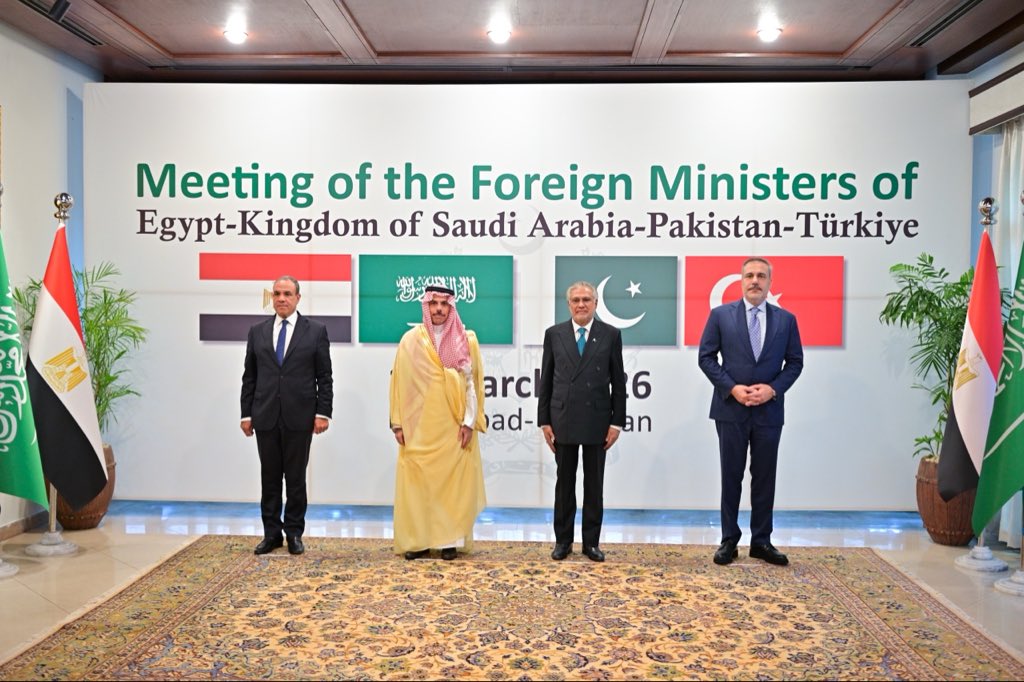
Islamabad, March 29, 2026:
At the opening of the Quadrilateral Consultations held in Islamabad today, the Foreign Ministers of Pakistan, the Kingdom of Saudi Arabia, the Republic of Türkiye, and the Arab Republic of Egypt convened to advance dialogue and strengthen cooperation on key regional and global issues of mutual interest.
Welcoming the distinguished delegations, the Foreign Minister of Pakistan underscored the importance of enhanced coordination among the four brotherly nations, emphasizing their shared commitment to peace, stability, and sustainable development across the region. He highlighted that the platform reflects a collective resolve to deepen diplomatic engagement and address evolving geopolitical challenges through dialogue and partnership.
The Foreign Ministers reaffirmed their strong historical ties and underscored the need to expand collaboration in areas including trade, investment, energy security, counterterrorism, and cultural exchange. They also exchanged views on the prevailing regional situation, emphasizing the importance of peaceful conflict resolution, respect for sovereignty, and adherence to international law.
The participating countries reiterated their commitment to promoting economic integration and connectivity, recognizing the potential for joint initiatives that contribute to prosperity and resilience in their respective regions. They also stressed the importance of addressing global challenges such as climate change, food security, and energy sustainability through coordinated efforts.
The Quadrilateral Consultations mark an important step towards institutionalizing cooperation among Pakistan, Saudi Arabia, Türkiye, and Egypt, with a shared vision of fostering stability, progress, and collective security.
The Foreign Ministers agreed to continue consultations on a regular basis and to explore concrete mechanisms for implementing the outcomes of their discussions.