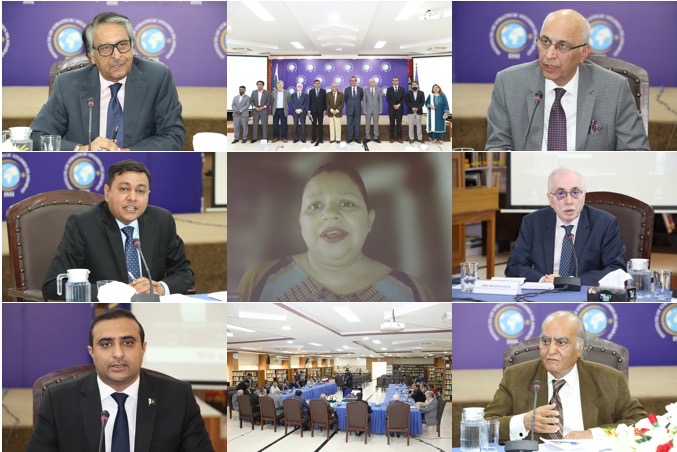
Islamabad, October 15, 2026(Nosheen): Experts at an international seminar organised by the Institute of Strategic Studies Islamabad (ISSI) have called on South Asian leaders to demonstrate political commitment and statesmanship to strengthen regional cooperation, address shared challenges, and promote collective development. The seminar, titled “Reimagining Regionalism in South Asia,” highlighted the urgent need for regional countries to overcome political differences and revive practical cooperation in the face of growing traditional and non-traditional security challenges, economic vulnerabilities, and shared developmental concerns.
The speakers emphasised that South Asia, home to more than two billion people and endowed with considerable economic potential, cannot achieve lasting peace, prosperity, and human development without meaningful cooperation among regional states. The seminar identified the South Asian Association for Regional Cooperation (SAARC) as the most viable existing platform for regional engagement despite its practical limitations and prolonged inactivity. Participants stressed that all member states must be treated as sovereign equals and that the organisation should serve the collective interests of the region rather than the preferences of individual countries.
The experts advocated a pragmatic, people-centric approach to regionalism, urging countries to separate political disputes from areas of mutual interest. They identified poverty alleviation, climate change, water scarcity, disruptive technologies, migration, trade facilitation, economic development, maritime cooperation, and public health as key areas where regional collaboration could deliver tangible benefits. Alongside efforts to revitalise SAARC, participants called for exploring smaller, flexible cooperation arrangements among willing regional countries, commonly known as minilateral initiatives. They also suggested that China could be invited to participate in such arrangements, given its interest in promoting regional stability and cooperation. The seminar was organised by the India Study Centre (ISC) at ISSI. Ambassador Jalil Abbas Jilani, former Foreign Minister of Pakistan, attended as the chief guest. Other speakers included Ambassador Masood Khalid, Pakistan’s former Ambassador to China; Mr. Fazle Lohani Babu, Deputy High Commissioner of Bangladesh to Pakistan; Professor Maneesha Wanasinghe-Pasqual, Executive Director of SASSRI, Sri Lanka; Ambassador Moin ul Haque, Director General of ISSI; and Ambassador Khalid Mahmood, Chairman of the ISSI Board of Governors.
In his remarks, Ambassador Jalil Abbas Jilani underscored that successful regional cooperation requires sustained political commitment, mutual confidence, and a willingness to recognise all countries as sovereign equals. He expressed hope that the leadership of all SAARC member states would demonstrate statesmanship and prioritise the broader interests of the region’s more than two billion people. The speakers agreed that adapting existing regional institutions to contemporary realities and pursuing practical, issue-based cooperation could help rebuild trust, strengthen economic and social connectivity, and create opportunities for collective progress across South Asia.
The seminar concluded with an interactive question-and-answer session, allowing participants to exchange views on the prospects and challenges of regional cooperation.