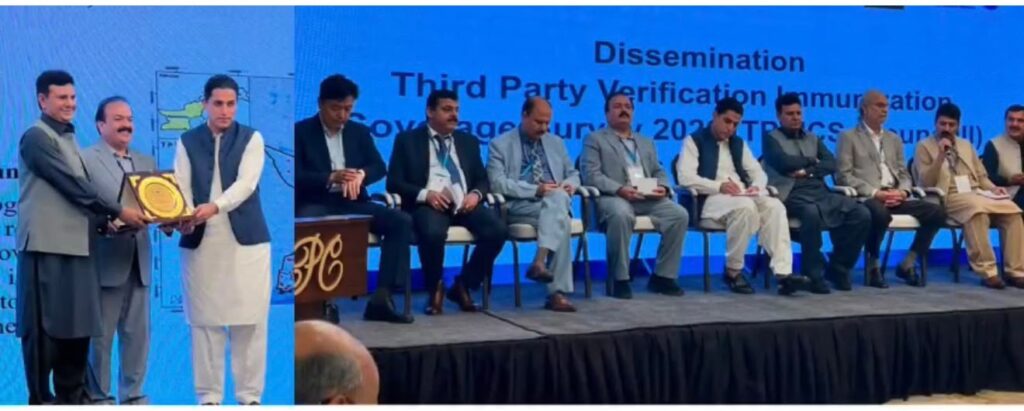
QUETTA, 16 August, 2026 (Kamran Raja): Balochistan has recorded a significant improvement in children’s immunization coverage, with the latest independent third-party verification survey showing a substantial rise in the number of children receiving the complete course of routine vaccinations. According to the Third-Party Verification of Immunization Coverage Survey (TPVICS) Round 3, 2026, conducted under the supervision of Aga Khan University Pakistan, the proportion of fully immunized children in Balochistan increased from 38 percent to 56.6 percent. The survey also recorded a 20.3 percentage-point decline in zero-dose children, referring to children who have never received any routine vaccination.The improvement is being viewed as an important achievement in reaching children who remain deprived of vaccination services, strengthening routine immunization and improving the overall performance of the Expanded Programme on Immunization (EPI) in the province.The nationwide survey was conducted as an independent third-party assessment to evaluate childhood vaccination coverage and the performance of immunization programmes. Children aged 12 to 23 months were included in the survey, while data collection continued from April 3 to May 30, 2026.
It is particularly noteworthy that Dr Aftab Kakar was serving as the head of EPI Balochistan during the survey period. Under his leadership, special emphasis was placed on improving routine immunization despite limited resources and Balochistan’s vast and challenging geographical terrain. Key measures included improving access to vaccines, identifying and reaching zero-dose children, strengthening field-level monitoring and ensuring effective utilisation of available resources. In recognition of outstanding performance, Dr Aftab Kakar was also presented an award at a ceremony held in connection with the programme’s achievements.The improvement in immunization coverage is being attributed not to the efforts of any single individual, but to effective leadership, improved planning, strategic interventions and coordinated teamwork.Under the leadership of Dr Aftab Kakar, the provincial EPI programme strengthened coordination with donor agencies and the Emergency Operations Centre (EOC), maintained regular communication with district EPI teams, adopted coordinated field strategies, enhanced monitoring and ensured timely identification and resolution of gaps.Providing children with protection against vaccine-preventable diseases remains a complex public health and administrative challenge in Balochistan due to its vast area, difficult terrain and scattered population.The increase in full immunization coverage from 38 percent to 56.6 percent, along with the significant reduction in zero-dose children, demonstrates that effective planning, strong field monitoring, coordinated district-level teamwork and improved collaboration with partner organisations can deliver substantial results even within limited resources.