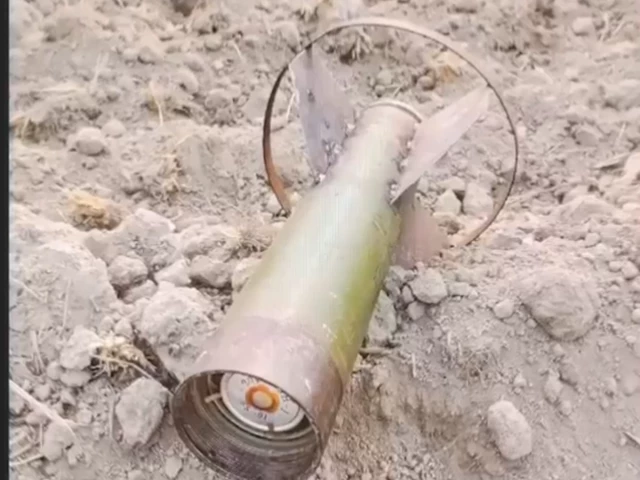
Islamabad, 10 November, 2026 (Kamran Raja): Security forces have recovered approximately 700 kilogrammes of locally manufactured explosives, a missile and other equipment during an ongoing search and clearance operation in various areas of North Waziristan, security sources said on Tuesday. According to the sources, security personnel searched 62 additional houses and several compounds as part of the operation. Clearance activities were completed at 17 compounds between Api village and Haider Khel, 28 in Maski and another 17 in other areas, while 14 suspected locations in Hassu Khel were also cleared. During searches in Mosaki, security forces seized around 700 kilogrammes of locally made explosives, while an Al-Farooq missile, 200 kilogrammes of urea and other equipment were recovered from Hassu Khel. Security sources said the clearance operation would continue until all suspected terrorist hideouts and locations potentially used by militants had been eliminated. The development comes a day after security forces recovered a substantial cache of improvised explosive devices, explosives, weapons and ammunition from two suspected terrorist hideouts located inside mosques in Muzak village, near Mir Ali. According to the Inter-Services Public Relations (ISPR), the hideouts were associated with the banned Tehreek-e-Taliban Pakistan (TTP), referred to by the state as Fitna al-Khawarij, and were allegedly used for storing explosives and operating torture cells. Meanwhile, security assessments indicate a growing terrorism threat in Pakistan. Data from the Armed Conflict Location and Event Data (ACLED) organisation shows that attacks increased from 658 in 2022 to 2,425 in 2025. Two reports presented to the federal cabinet in October also indicated a 195 per cent rise in terrorist incidents in Khyber Pakhtunkhwa between March 2024 and September 2026. The reports further stated that police and security personnel were targeted in 73 per cent of attacks recorded in the province during 2026, with drones and improvised explosive devices emerging as increasingly significant threats. Pakistan has repeatedly accused the Afghan Taliban authorities of providing safe havens to the banned TTP on Afghan soil, enabling the group to launch attacks inside Pakistan. A United Nations Security Council monitoring report published in February 2026 also highlighted an increase in TTP attacks originating from Afghanistan and noted that the group continued to receive support and operational freedom from Afghanistan’s de facto authorities. The report further pointed to Al Qaeda’s training and logistical support for the TTP, as well as the group’s access to advanced weapons, night-vision equipment and drone technology.