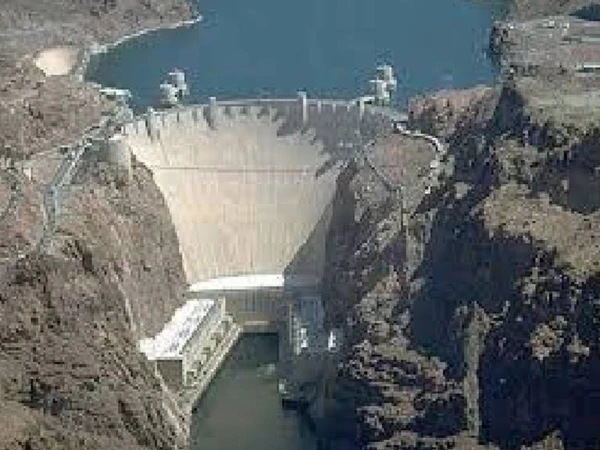
Islamabad, 8 November, 2026 (Ghufran): The Auditor General of Pakistan has uncovered billions of rupees in financial irregularities, violations of contractual procedures, unauthorized payments and administrative negligence in the Diamer-Bhasha Dam project, one of Pakistan’s major water and energy initiatives. According to the Auditor General’s Audit Report for 2025-26, physical progress on the project stood at only 19.95 percent by June 2025, while financial progress had reached 39.67 percent, highlighting a significant gap between expenditure and actual construction work. The report revealed that more than Rs73.31 billion had been transferred to the bank account of the Deputy Commissioner/Land Acquisition Collector, Chilas, between October 2010 and June 2021 for land acquisition and the resettlement of affected people. Of this amount, over Rs4.96 billion was transferred to 24 private banks, which the audit identified as a violation of treasury rules and recommended an investigation to determine responsibility. The main dam construction contract was awarded to a joint venture of Power China and Frontier Works Organization (FWO) for more than Rs442.40 billion, while the audit raised concerns over the failure to fully comply with the contractor’s eligibility criteria. Objections were also raised over a consultancy agreement worth Rs27.18 billion. The report further questioned a change in the consultant selection procedure from Quality and Cost-Based Selection to Quality-Based Selection. It also identified an additional payment of more than Rs10.17 billion to the main contractor following amendments to the contract. According to the audit, the payment mechanism for the installation of reinforced cement concrete (RCC) was changed, and the amount under the existing Bill of Quantities was divided into two payments, resulting in the release of the additional amount without the relevant work being carried out. The report also objected to delays in recovering outstanding instalments of a Rs1.92 billion mobilization advance and approval to recover a further Rs1.12 billion in 50 instalments. An additional payment exceeding Rs674.5 million was also identified because the contractual 10 percent retention money was not deducted from payments amounting to more than Rs20.52 billion. The audit further questioned payments of over Rs537.3 million to the contractor for providing office and residential facilities to consultants, as well as more than Rs104.2 million claimed for security personnel’s accommodation. Other irregularities included losses exceeding Rs100 million due to design changes and additional payments of over Rs83 million resulting from unusually high construction rates. The report also pointed out the use of rates higher than government-approved prices for installing tuff tiles in the external development works of Cadet College Chilas, non-recovery of approximately Rs20 million spent on repairs to the Karakoram Highway, and objections involving drivers’ salaries and fuel costs for bulletproof vehicles under other contracts. The audit also identified an advance payment of more than Rs498.8 million to the Deputy Commissioner/Land Acquisition Collector, Kohistan, for land acquisition and the non-recovery of over Rs40 million from the Gilgit-Baltistan government for power house operations and maintenance. The project required the acquisition of 35,924 acres of land, of which 32,790 acres had been acquired by June 2025, leaving 3,134 acres outstanding. Governance and administrative shortcomings were also highlighted, with four of the 16 seats on the project company’s board of directors reod. The Auditor General has recommended a comprehensive examination of all financial transactions relating to land acquisition and contractors, recovery of unauthorized payments and outstanding amounts, and determination of responsibility for the identified irregularities.maining vacant. The company had also failed to prepare its annual financial statements for the fiscal years 2022-23 to 2024-25, while the vacant board positions remained unfilled despite the prime minister’s directions. The report further recorded a cost escalation of more than Rs91.32 billion and significant delays in the project’s completion schedule. The original completion target of June 2027 was revised to February 2029 under the contract, while the extended schedule projected completion by 2030. Furthermore, despite approval of the PC-I for the 4,500-megawatt power house in April 2023, its construction contract had not been awarded by the end of the audit peri