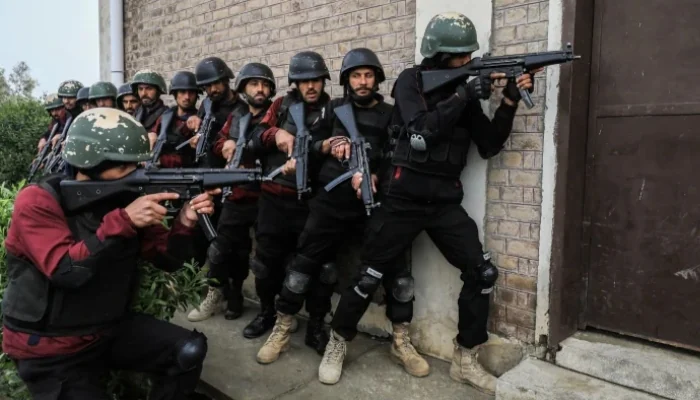
Islamabad, 8 November, 2026 (Kamran Raja): The Khyber Pakhtunkhwa government has announced plans to establish faceless Anti-Terrorism Courts (ATCs) to conduct trials of terrorism suspects while protecting judges, witnesses and other individuals involved in the judicial process from potential threats. KP Home Secretary Amjad Ali Khan announced the initiative during a press conference in Peshawar, stating that the provincial government had developed a comprehensive strategy to strengthen counterterrorism efforts across the province. He said the strategy included expanding intelligence-based operations (IBOs), arresting individuals providing logistical and other support to terrorists, and improving the operational capacity of law enforcement agencies. Khan criticized the previous provincial government for failing to provide adequate resources for counterterrorism operations and the repatriation of Afghan refugees, claiming that although Rs6.4 billion had been allocated for 22 districts, only Rs1 billion had been released. He added that the federal and provincial governments were now working in coordination to address the security challenges. The home secretary announced that Rs70 billion would be allocated to the police and Counter Terrorism Department (CTD) during the current year, including Rs59.8 billion for police infrastructure and Rs10.3 billion for the CTD. He said a plan had also been prepared to increase the CTD’s operational capacity from 12 percent to 37 percent, while efforts were underway to reduce the police personnel shortage from 15 percent to five percent. Khan further revealed that anti-drone systems were being installed in Dera Ismail Khan, Lakki Marwat and Bannu to strengthen security arrangements. Under the proposed faceless court system, the identities of judges, witnesses, police personnel and other individuals involved in terrorism-related cases would remain confidential to protect them from possible retaliation by terrorist networks. Legislation was being introduced to establish the system, while the parties concerned would retain the right to challenge court decisions before the High Court. The government also plans to strengthen public engagement and improve local dispute-resolution mechanisms by making Dispute Resolution Councils (DRCs) and liaison committees in tribal areas more effective and promoting the traditional jirga system. Additionally, 400 police facilitation smart desks will be established across the province to improve public access to police services and facilitate the registration of complaints. The measures form part of the provincial government’s broader strategy to strengthen law enforcement, improve institutional capacity and enhance security against terrorism.