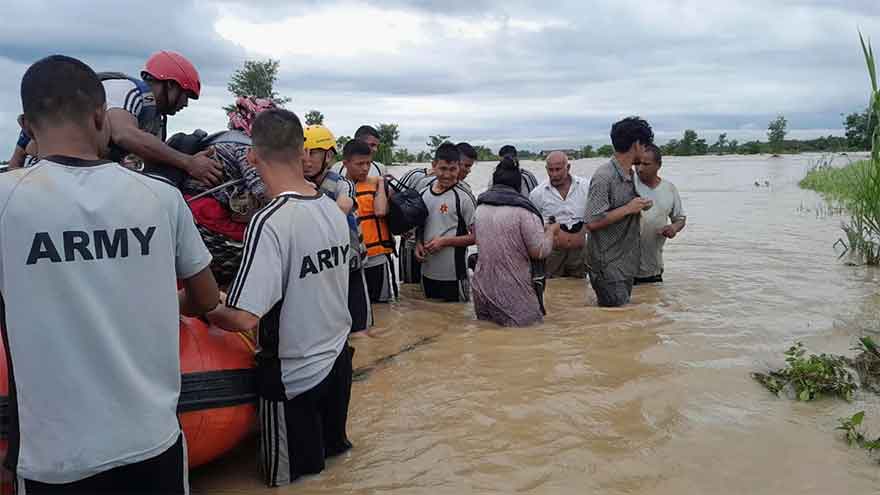
KATHMANDU, 1 September, 2026 (Kamran Raja): Rescue teams accompanied by search dogs continued operations on Tuesday along the Nepal-China border, searching through mud, rocks and debris for thousands of people still missing after catastrophic floods swept through Himalayan communities. Nepal’s disaster management authorities reported 1,003 deaths and 3,916 people missing, including 583 foreign nationals, while China reported 16 deaths and 546 missing people. The extensive destruction, including landslides, damaged roads and blocked access routes, has severely hampered rescue operations and raised fears that the death toll could increase as teams reach isolated areas. Rescuers are also working to locate hundreds of workers believed to be trapped inside tunnels at hydropower projects damaged by the floods. Local authorities said around 900 workers were missing from 12 projects, with approximately 500 believed to be trapped inside tunnels. Nepalese and foreign rescue teams have been using heavy machinery, helicopters, search dogs and other equipment to reach affected communities. In Kathmandu, authorities have begun burying unidentified bodies in temporary graves while preserving DNA samples, photographs and other identifying information to help families identify and claim the remains later. Nepalese authorities said at least 11,814 people have been rescued so far. The disaster was triggered by a glacial collapse in the Himalayas that sent huge volumes of rock, ice and meltwater into downstream valleys, causing rivers in Tibet and Nepal to rise rapidly and sweep away homes, roads and bridges. China has sent additional relief supplies and DNA-testing experts to assist Nepal in identifying victims. Nepal Prime Minister Balendra Shah said the catastrophe highlighted the growing risks posed by climate change in the Himalayan region and called for stronger international attention to climate-related disasters.