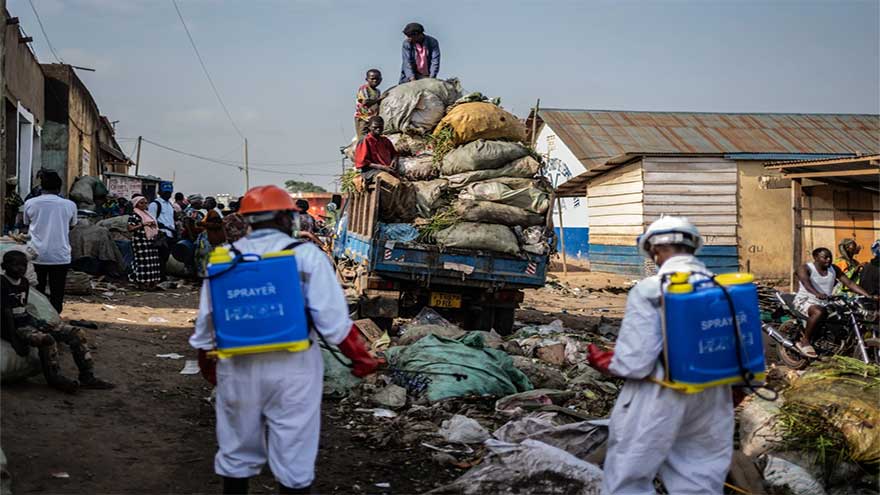
BUNIA, Congo _11 August, 2026 (Kamran Raja): The death toll from Congo’s rapidly spreading Ebola outbreak has surpassed 2,000, with health authorities facing major challenges in reaching affected communities because of armed conflict, poor road networks and work stoppages by health workers over unpaid salaries.According to government data released Tuesday, the outbreak has recorded 4,381 confirmed cases, including 2,011 deaths. The current outbreak was officially declared on May 15, although health authorities said genetic sequencing indicated that it had begun months earlier, in February. The death toll has risen at an alarming pace, reaching the first 1,000 deaths in around nine weeks and doubling in only about three weeks.Health officials have described the situation as increasingly alarming and called for intensified response efforts in affected areas. Dr. Jean-Marie Akandabo, who is involved in treating patients at a clinic in Ituri province, warned that the disease continues to pose a serious threat to communities. The outbreak is already the second-largest Ebola outbreak in history, behind the 2014–2016 West Africa epidemic, which recorded more than 28,000 cases and over 11,000 deaths.
The current outbreak is being caused by the rare Bundibugyo strain of Ebola, for which no approved vaccine or treatment is currently available. Clinical trials for potential vaccines and treatments have begun in Ituri, the epicenter of the outbreak in eastern Congo. Aid workers say response operations remain behind the spread of the virus, while many health workers have gone on strike over unpaid wages.The outbreak has recorded a case fatality rate of 45.9 percent, higher than the 39.6 percent recorded during the 2014–2016 West Africa outbreak. Health experts attribute the high fatality rate partly to delayed access to medical care, late reporting of symptoms and difficulties in identifying cases at an early stage.Authorities have imposed restrictions on public gatherings and closed Ituri’s main airport in an effort to contain the disease. However, population movements linked to trade, mining activities and displacement caused by conflict continue across areas near the borders with South Sudan, Uganda and Rwanda.
The World Health Organization has warned that many new cases are still being detected outside monitored contact networks, indicating that transmission remains difficult to control. WHO officials also said that some early cases were initially misdiagnosed as malaria or typhoid, while testing was initially focused on a more common Ebola strain.WHO Regional Director for Africa Dr. Mohamed Yakub Janabi said health workers were struggling to keep pace with the outbreak, warning that authorities were effectively “chasing the virus” as it continued to move ahead of response efforts.The first Ebola virus was identified in 1976 near the Ebola River in what is now the Democratic Republic of Congo. The current outbreak is the country’s 17th Ebola outbreak and has become its largest to date.