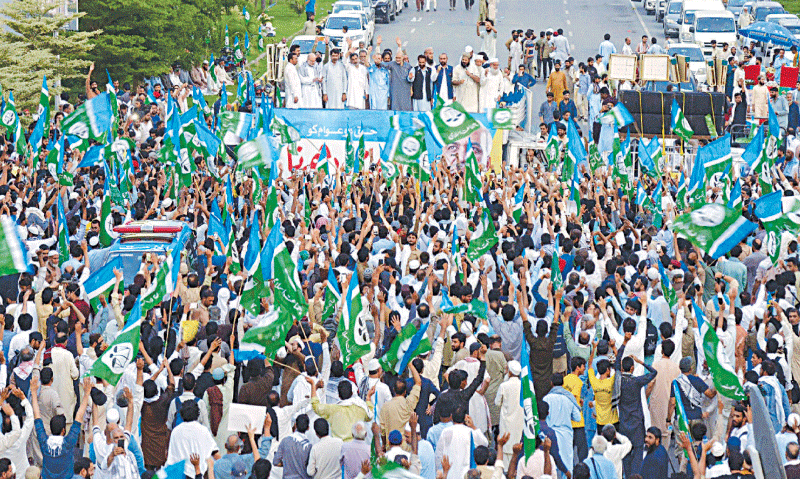
PESHAWAR, 07 August, 2026(Nosheen): Jamaat-e-Islami (JI) has launched nationwide protests against rising petroleum prices and the petroleum levy, with demonstrations and road blockades reported in several cities across the country. The party has warned that the protest movement could be expanded if the government fails to provide relief to the public. Addressing a press conference at the Peshawar Press Club, JI Khyber Pakhtunkhwa chief Abdul Wasay said the protest call was given by JI Emir Hafiz Naeemur Rehman against increasing fuel prices and the additional financial burden on citizens. Abdul Wasay alleged that the government had collected around Rs1.9 trillion through the petroleum levy during the past year, including Rs1.2 trillion from people who were not regular taxpayers. He criticized the fuel pricing mechanism, saying frequent price revisions had increased difficulties for ordinary citizens. He claimed that fuel prices had continued to rise following tensions between Iran and Israel, adding that consumers were being forced to bear the burden of higher costs. He also accused the government of transferring the impact of international oil price increases to the public while failing to provide similar relief when global prices declined.
The JI leader said millions of motorcycle users across Pakistan were paying a heavy cost due to increased petrol prices and petroleum levies. He demanded the withdrawal of the levy and reduction in petroleum prices.As part of the protest strategy, JI workers in Khyber Pakhtunkhwa blocked key routes, including motorway interchanges on the Peshawar-Islamabad Motorway, the Indus Highway in Kohat, and the Pak-Afghan Highway near Bab-i-Khyber in Jamrud. Abdul Wasay said ambulances would be allowed to pass during the demonstrations. He added that the party’s women wing also organized a protest demonstration on GT Road in Peshawar as part of the wider campaign. He further criticized the government’s economic policies, alleging that loans obtained from international financial institutions, including the International Monetary Fund and the World Bank, had increased public pressure through higher taxes and fuel costs. Warning of further escalation, Abdul Wasay said that if petroleum prices were not reduced and the levy was not abolished, the party could launch a march towards Islamabad in the next phase of its movement.