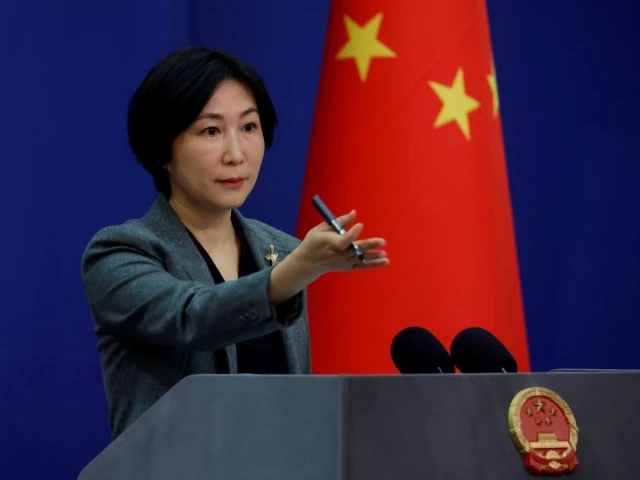
Beijing, 12 November, 2026 (Nosheen): China has rejected what it described as the United States’ “Chinese spy narrative” surrounding Nvidia Chief Executive Officer Jensen Huang, maintaining that the country’s technological development is driven by independent innovation and international cooperation rather than espionage. Speaking at a regular press briefing in Beijing on Thursday, Chinese Foreign Ministry spokesperson Mao Ning urged Washington to stop using alleged espionage concerns as a justification for imposing restrictions on Chinese technology. She said China’s scientific and technological progress was based on independent innovation and open cooperation. Her remarks came amid reports that Nvidia’s board was examining allegations involving Huang’s personal relationships and investigating whether he had been targeted by a foreign intelligence operation. The Wall Street Journal reported that Nvidia’s board was considering Huang’s future following reports of two alleged extramarital relationships, while The New York Times separately reported an alleged relationship with Kimberly Powell, the company’s vice president of healthcare. Huang has previously acknowledged being unfaithful to his wife. Asked whether the controversy could affect the expected meeting between Chinese President Xi Jinping and US President Donald Trump next week, Mao said Beijing had already clarified its position on what it called the Chinese espionage narrative. She added that China and the United States remained in close communication regarding engagements between their leaders and expressed Beijing’s willingness to work with Washington to implement the consensus reached by the two presidents. Mao said China sought to advance a constructive relationship with the United States based on strategic stability, mutual respect, fairness and reciprocity. Chinese President Xi Jinping is expected to host Trump in Shenzhen during the annual Asia-Pacific Economic Cooperation (APEC) leaders’ summit. Commenting on US restrictions on exports of advanced semiconductors to China, Mao accused Washington of extending national security concerns beyond their legitimate scope. She also criticised what she described as discriminatory measures targeting Chinese companies, reiterating Beijing’s opposition to the use of national security arguments to restrict China’s technological and industrial development.