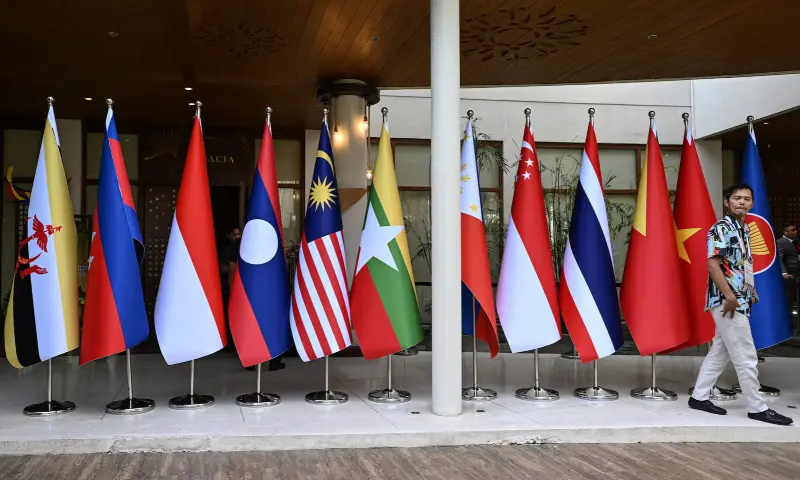
Islamabad, 13 November, 2026 (Kamran Raja): The Association of Southeast Asian Nations (ASEAN) is facing growing pressure to reconsider its five-year restrictions on Myanmar’s military leadership participating in high-level meetings, as several member states pursue closer ties with the country despite its ongoing civil war. ASEAN leaders are expected to review the issue at their summit in Manila from November 15 to 17. Myanmar has been in turmoil since February 2021, when military chief Min Aung Hlaing seized power in a coup, triggering widespread armed conflict that has reportedly killed more than 100,000 people. The country’s military leadership has remained excluded from ASEAN summits and foreign ministers’ meetings over its failure to implement the bloc’s Five-Point Consensus, which calls for an end to violence, inclusive dialogue and humanitarian assistance. However, Thailand, Laos, Vietnam, Cambodia and Malaysia have increased diplomatic engagement with Myanmar this year, with several hosting Min Aung Hlaing on official visits. Thai Foreign Minister Sihasak Phuangketkeow has called for Myanmar’s foreign minister to be allowed to attend ASEAN meetings, saying gradual progress could lead to broader participation by 2028. Malaysian Prime Minister Anwar Ibrahim has also expressed support for Myanmar’s eventual reintegration into the regional bloc. Analysts warn that these differing approaches could weaken ASEAN’s unity and undermine its peace initiative, as fighting continues, millions remain displaced and political dialogue has made little progress. Former civilian leader Aung San Suu Kyi also remains in detention following the military takeover. Meanwhile, Thailand has offered to facilitate talks between Myanmar’s authorities and ethnic armed groups, while the Philippines’ special envoy has pursued humanitarian and diplomatic engagement. Human rights organisations have urged ASEAN to maintain restrictions and press the military to end abuses, release political prisoners and restore civilian rule. Regional experts have stressed that diplomatic engagement should be linked to tangible progress, including reduced violence and improved humanitarian access, warning that political acceptance of Myanmar’s military leadership should follow meaningful reforms rather than precede them.