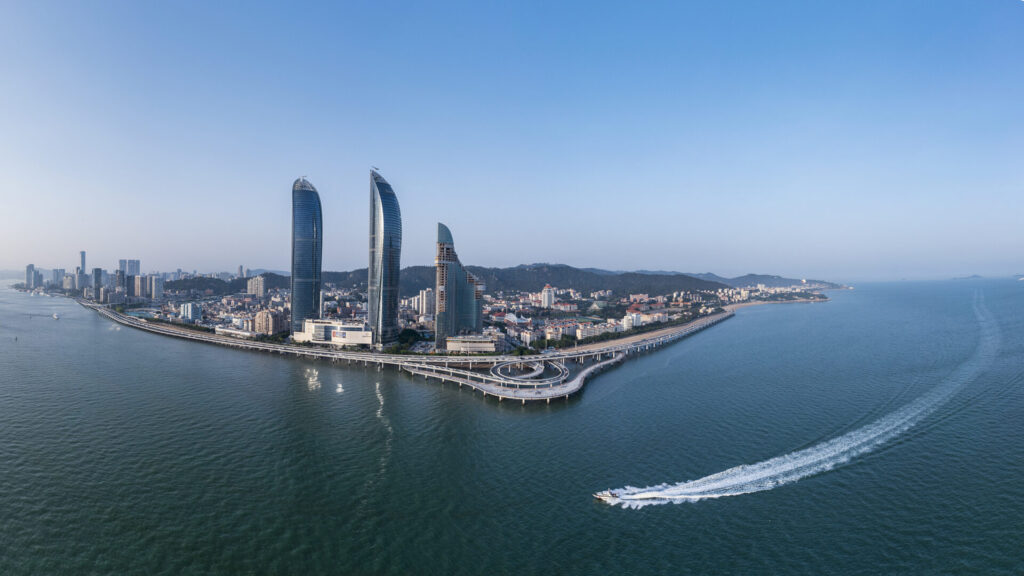
BEIJING,, 6 November, 2026 (Kamran Raja): The 2026 World Ocean Week opened in Xiamen, southeast China’s Fujian Province, on Thursday, highlighting China’s contributions to global ocean governance, marine biodiversity conservation and the sustainable development of the blue economy. The event unveiled five major outcomes, including a publication on seamounts and a dedicated ecological and environmental data product, while featuring 33 activities such as seminars on marine science, ecological conservation and business matchmaking events. A bilingual report outlining the status, significance and prospects of the Agreement under the United Nations Convention on the Law of the Sea on the Conservation and Sustainable Use of Marine Biological Diversity of Areas beyond National Jurisdiction (BBNJ Agreement), along with China’s role in its development and implementation, was also released. Compiled by the China Institute for Marine Development Strategy under the Ministry of Natural Resources, the report highlights the importance of the agreement, which entered into force on January 17, 2026, becoming the third implementing agreement under the UN Convention on the Law of the Sea and addressing a major legal gap in the protection of marine biodiversity beyond national jurisdictions. China contributed to nearly two decades of negotiations and presented proposals covering the agreement’s four key areas, including benefit-sharing arrangements for marine genetic resources, area-based management measures, transparency in environmental impact assessments and capacity-building support for developing countries. The country has designated marine ecological conservation redlines covering approximately 150,000 square kilometres, established 353 marine protected areas and implemented 194 marine ecological conservation projects. It is also among the few countries to have recorded a net increase in mangrove coverage. China has further made its manned deep-sea submersibles Jiaolong and Fendouzhe, along with research vessels such as Deep Sea No. 1, available for international scientific expeditions. It maintains nearly 60,000 marine microbial resources and facilitates international access to relevant samples and scientific data. Under the United Nations Decade of Ocean Science for Sustainable Development, China has led 10 major international scientific programmes, including an initiative focused on the digital discovery of important deep-sea habitats. The country has also strengthened its legal framework for environmental impact assessments of activities in international seabed areas and encouraged mineral exploration contractors to fulfil their environmental responsibilities. Its scientific expertise, environmental data and trained professionals are expected to support developing countries in assessing deep-sea activities and promoting greener, low-carbon ocean development. Furthermore, China has signed marine cooperation agreements with more than 50 countries and international organisations, established over 40 marine research centres and joint laboratories, and invested approximately 200 million yuan, equivalent to around 30 million US dollars, in more than 100 small-scale marine cooperation projects. It has also organised over 300 training programmes in marine science, technology and management, benefiting more than 6,000 young researchers and officials from developing countries. China, among the earliest signatories and parties to the BBNJ Agreement, has also applied to host the agreement’s secretariat in Xiamen, expressing its readiness to provide sustained support for its comprehensive and effective implementation.