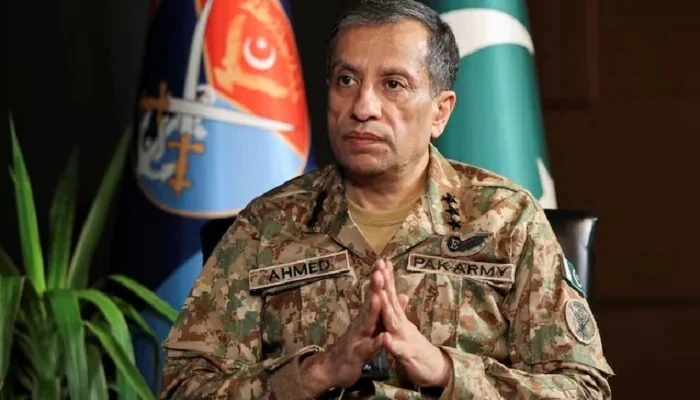
ISLAMABAD, 1 November, 2026 (Kamran Raja): Director General Inter-Services Public Relations (ISPR) Lieutenant General Ahmed Sharif Chaudhry has warned that the Afghan Taliban lack the capacity to withstand the response Pakistan could deliver against threats originating from Afghan territory, stressing that the country has the capability and strategy to counter any aggression. In an interview with Reuters, the military spokesperson said Pakistan was fully prepared to deal with emerging threats, including the use of drones by the Afghan Taliban, and was capable of responding to any attempt to challenge its operational readiness. He maintained that the drone technology available to the Afghan Taliban was not indigenous and alleged that it was being provided by external sponsors. Referring to previous tensions with India, he said Pakistan had successfully countered numerous advanced drones sent by New Delhi and had since further strengthened its operational capabilities. The ISPR DG also accused the Afghan Taliban authorities of providing shelter to terrorist leaders and allowing militant groups to use Afghan territory for attacks against Pakistan. He said Islamabad did not seek Afghanistan’s isolation and remained willing to engage with Kabul, but expected the Afghan authorities to fulfil their responsibilities as a state and prevent cross-border terrorism. He further alleged that terrorist groups were receiving weapons and support from Afghan territory and that Afghan nationals, including individuals associated with the Taliban regime, had been found among those involved in attacks inside Pakistan. Warning that support for terrorism would carry consequences, he said Pakistan had both the capability and a clear strategy to impose a cost on those responsible. Rejecting claims that Pakistan was supporting anti-Taliban elements, he said Afghanistan was providing an environment in which several militant organisations could operate. He described terrorism and drugs as two major challenges emerging from Afghanistan, warning that their impact extended beyond the region. The military spokesperson also said Pakistan had no intention of interfering in Afghanistan’s internal affairs, adding that the Afghan people had the right to decide their own system of governance, but no state could tolerate armed groups, militias or mercenaries operating from its territory. Speaking about modern warfare, Lieutenant General Chaudhry said the Pakistan Army was adapting to emerging challenges through advanced technologies, including drones, artificial intelligence, quantum systems and cyber capabilities, while declining to disclose specific operational details. He described the Pakistan Army as a technology-oriented force prepared to respond to evolving security threats.