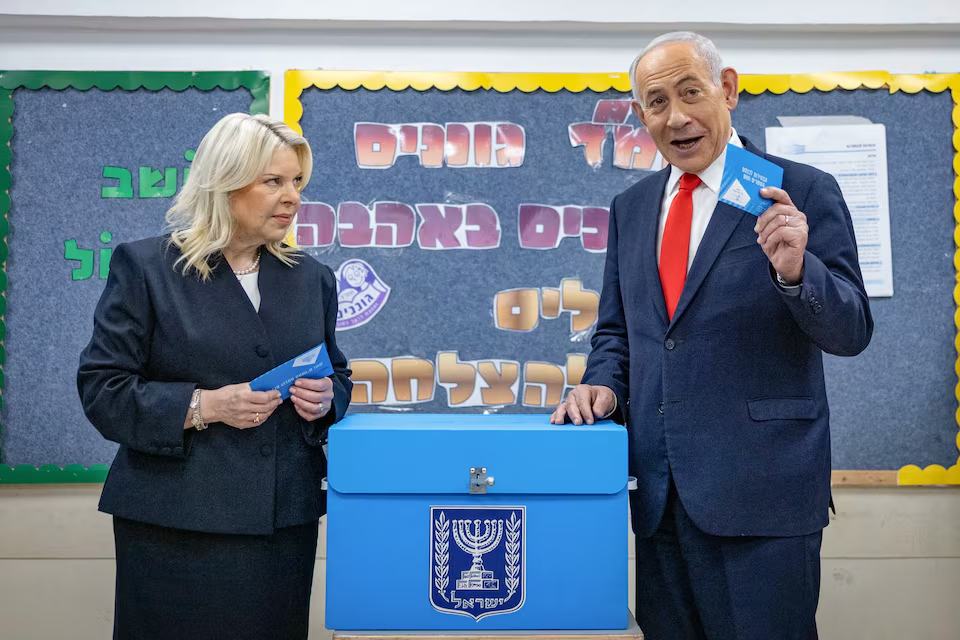
Jerusalem, 27 October, 2026 (Kamran Raja): Israelis turned out in record numbers on Tuesday to vote in the country’s first general election since the Hamas-led attacks of October 7, 2023, with Prime Minister Benjamin Netanyahu facing a crucial test of public confidence over his handling of the country’s security and the subsequent wars in Gaza, Lebanon and Iran. According to the Central Elections Committee, 44.9 percent of eligible voters had cast their ballots within the first seven hours of polling, marking an unprecedented turnout. The election has emerged as a major political challenge for Netanyahu, Israel’s longest-serving prime minister, whose right-wing coalition has faced growing domestic divisions and international criticism over its policies. His main rival, former military chief Gadi Eisenkot, is seeking to unseat him with the backing of centrist and right-wing parties, while opposition groups have pledged to investigate the security failures surrounding the October 7 attacks. Opinion polls have indicated a close contest, with neither candidate assured of securing a parliamentary majority in the 120-seat Knesset. Analysts have said the participation of Palestinian citizens of Israel, who constitute roughly one-fifth of the country’s population, could prove decisive in determining the outcome. Netanyahu urged his supporters to vote, warning that the election represented a critical moment for Israel’s future. Meanwhile, Eisenkot expressed confidence that the vote would bring a new political direction and greater accountability for the events of the past three years. The opposition has criticised Netanyahu’s government over the security failures of October 7 and its handling of the subsequent military campaign in Gaza, where Palestinian health authorities have reported more than 74,000 deaths. Eisenkot has pledged to dismantle Hamas’s military and governing capabilities within 18 months if he forms a government. Far-right coalition leader Itamar Ben-Gvir, meanwhile, predicted that Netanyahu would return to power. The election’s outcome remains uncertain, and if neither Netanyahu nor Eisenkot succeeds in forming a governing coalition, Netanyahu could continue as caretaker prime minister until another election is held. The vote is widely viewed as a defining moment for Israel’s political leadership, security policies and future relations with the Palestinians and the wider region.