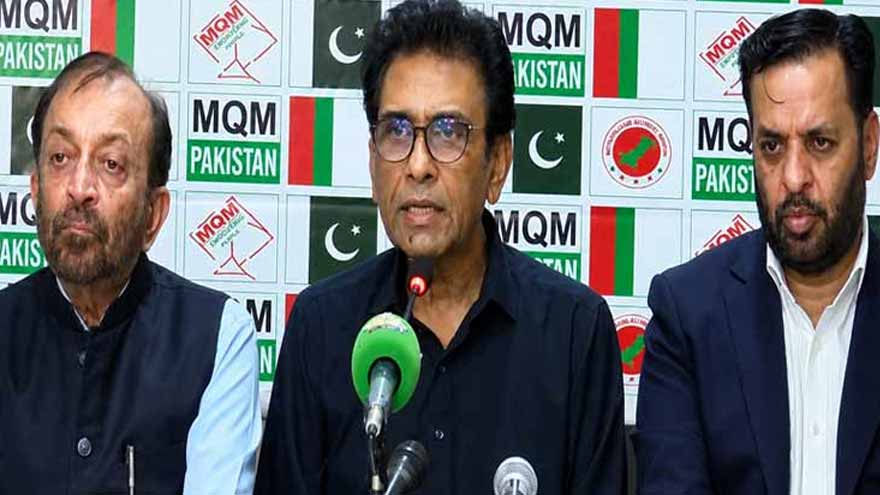
Karachi, 16 August, 2026 (Ghufran): Muttahida Qaumi Movement-Pakistan (MQM-P) has stepped up its campaign for the creation of new provinces, saying that Sindh has become difficult to manage effectively under the existing administrative system.MQM-P Chairman Khalid Maqbool Siddiqui, addressing a press conference alongside Farooq Sattar and Mustafa Kamal, said that changes in Pakistan’s administrative structure were essential in line with the increase in population. He said the country’s population had continued to grow, but no new provinces had been created, resulting in increasing pressure on the existing administrative system. According to Khalid Maqbool Siddiqui, the demand for new provinces was not part of any political or organisational agenda but concerned the basic rights of citizens and the effective provision of public services.He urged all political parties to sit together and hold serious discussions on the creation of new provinces. He said the Constitution already provided room for the creation of new provinces.Mustafa Kamal said the creation of new provinces would neither divide Pakistan nor change the geographical boundaries of Sindh, but would constitute administrative measures aimed at bringing government closer to the people.
He also criticised the performance of the Sindh government, saying that despite the province receiving billions of rupees in funds, it had failed to ensure the provision of basic facilities to the people.Mustafa Kamal said the devolution of powers to the grassroots level and empowerment of local government institutions were essential to address public grievances.Farooq Sattar described Karachi as Pakistan’s economic capital and said the city should be given greater administrative powers. He said Karachi contributes a significant share to the country’s tax revenue and exports, yet the city continues to face problems of poor governance and corruption.The MQM-P leaders said the existing dministrative system required fundamental reforms. They described effective local governments and the creation of additional administrative units as important measures for improving governance, reducing deprivation and accelerating development.