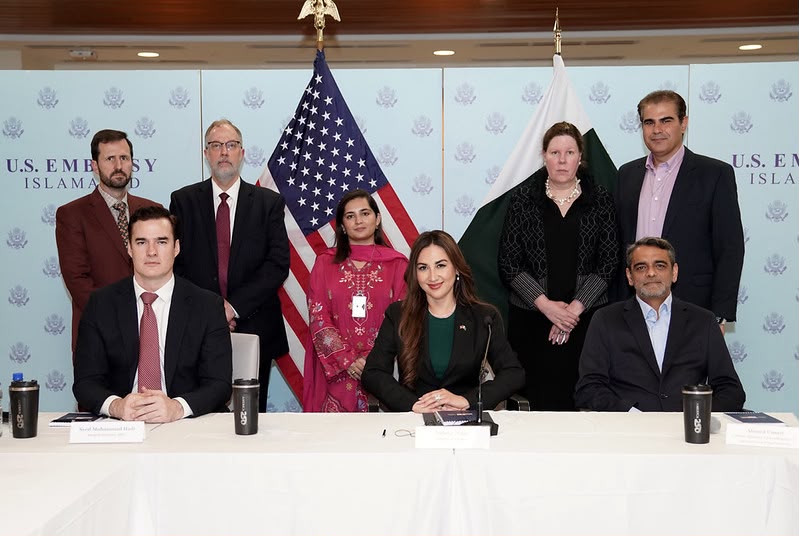
Islamabad, 06 August , 2026 (Kamran Raja): The U.S. Mission in Pakistan has highlighted significant opportunities for expanding cooperation between the United States and Pakistan in the field of agricultural technology, with a focus on innovation, investment, and modernization of Pakistan’s agriculture sector. U.S. Chargé d’Affaires Natalie A. Baker emphasized the potential for increased collaboration during a Direct Line webinar organized this week with American businesses and investors, Pakistani government officials, and agricultural product producers. The webinar was arranged by the Business Council for International Understanding (BCIU) in cooperation with the U.S. Embassy in Islamabad, the U.S. Department of Commerce, and the Government of Pakistan. Addressing the participants, Chargé Baker said agriculture remains a vital pillar of Pakistan’s economy, contributing nearly one-quarter of the country’s GDP and providing livelihoods to millions of people. She highlighted that greater integration of U.S. agricultural technologies and expertise could help Pakistan overcome sectoral challenges, improve productivity, and create new commercial opportunities for both countries.
“American companies are well positioned to bring their expertise, technologies, and decades of practical experience to the table,” Chargé Baker said, adding that U.S. innovations, including precision agriculture machinery, advanced irrigation systems, digital farm management solutions, and cold chain logistics, can support farmers in increasing yields while conserving resources. She noted that strengthening agricultural cooperation would further enhance bilateral trade relations. In 2025, U.S. exports to Pakistan in agricultural and related goods exceeded $1.5 billion.
During the webinar, Pakistani participants highlighted regulatory and policy measures aimed at facilitating increased imports of U.S. agricultural products, including soybeans, cotton, and planting seeds. They also encouraged greater American investment in areas such as farm mechanization, controlled-atmosphere storage, food processing, seed development, and biotechnology. Chargé Baker underscored the long-term benefits of U.S. investment, stating that when American companies introduce innovative technologies into new markets, they share knowledge, train local partners, establish sustainable business relationships, and contribute to economic growth.
The webinar also featured discussions on the upcoming U.S. Department of Commerce’s Certified Agricultural Technologies Trade Mission to Pakistan, scheduled for October 26–30, 2026, and led by BCIU. Inviting American companies to explore Pakistan’s growing agricultural technology and food processing sectors, Chargé Baker said supporting U.S. businesses in identifying opportunities in Pakistan’s agriculture sector remains a key priority of the U.S. Embassy. She appreciated the cooperation of BCIU, the Government of Pakistan, provincial authorities from Punjab and Sindh, representatives of the Special Investment Facilitation Council (SIFC), the Green Corporate Initiative, and participating American companies for their partnership in promoting agricultural collaboration between the two countries.