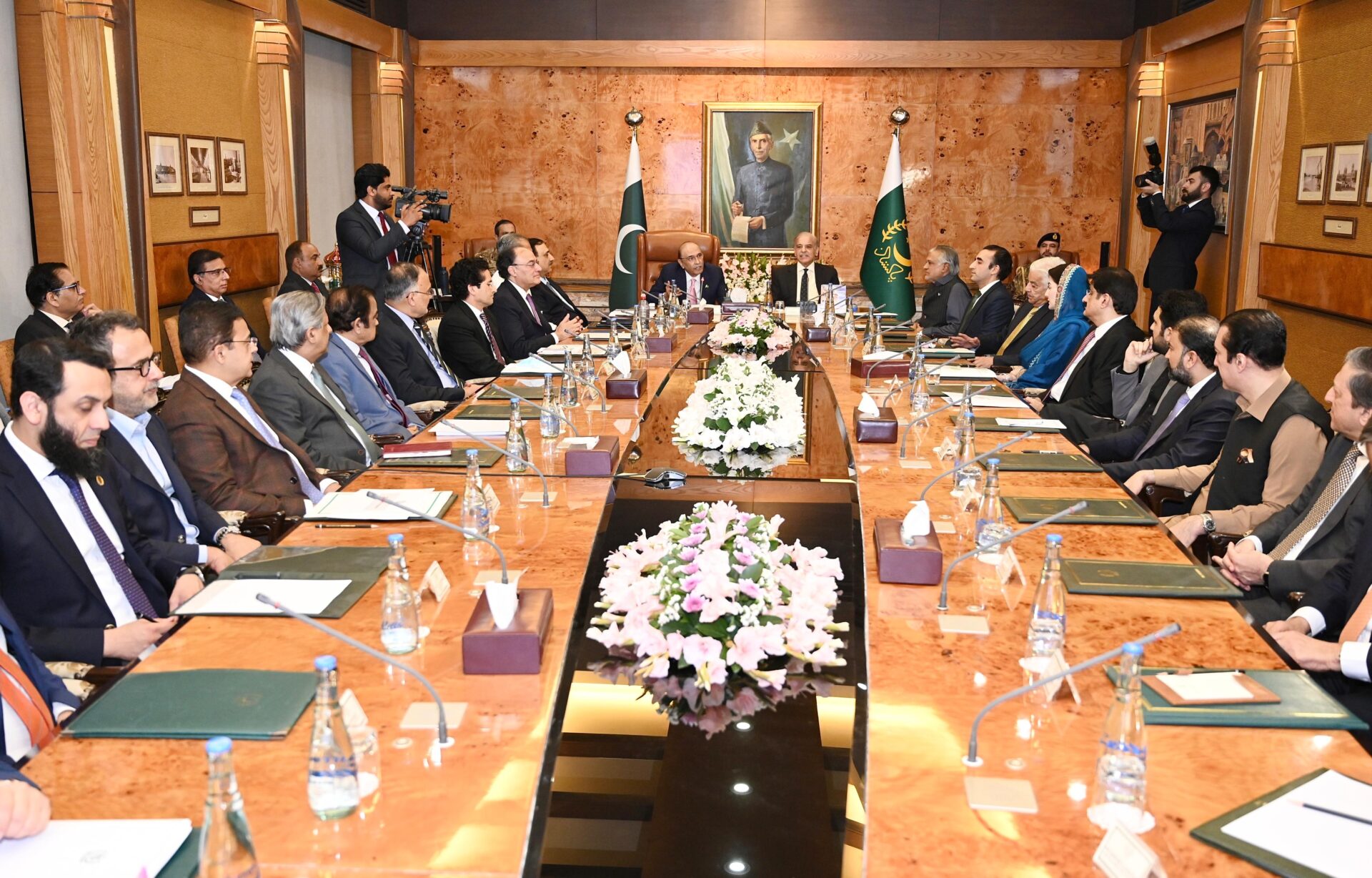
Islamabad: 30 March 2026(Kamran Raja): President Asif Ali Zardari has directed that, in view of mounting oil and gas supply pressures, rising energy costs, and the evolving regional environment, all possible measures must be taken to ease the burden of inflation on the common man, particularly with regard to essential goods and services.
The President made these remarks while chairing an expanded consultative meeting at Aiwan-e-Sadr, attended by Prime Minister Shehbaz Sharif, along with leadership from all provinces, as well as Gilgit-Baltistan and Azad Jammu and Kashmir (AJ&K).
The meeting was attended by key members of the federal cabinet and senior leadership, including Deputy Prime Minister and Foreign Minister Ishaq Dar, Minister for Defence Khawaja Asif, Minister for Interior Mohsin Naqvi, Chairman PPP Bilawal Bhutto Zardari, Minister for Finance Muhammad Aurangzeb, Minister for Planning Ahsan Iqbal, Chief Minister Punjab Maryam Nawaz, Chief Minister Sindh Murad Ali Shah, Chief Minister Balochistan Sarfraz Bugti, and other senior officials.
The participants were briefed on measures being undertaken by provincial governments, as well as Gilgit-Baltistan and AJ&K administrations, to manage price pressures, ensure the availability of essential commodities, and mitigate the impact on citizens through a coordinated national response.
The meeting also reviewed the broader regional situation and its implications for Pakistan’s security environment, economic outlook, and food security. It was noted with satisfaction that, despite global challenges, timely policy decisions have ensured uninterrupted fuel supply, with adequate stocks currently available and future arrangements in place.
Deputy Prime Minister Ishaq Dar briefed the participants on Pakistan’s proactive diplomatic outreach, including his recent engagements with the leadership of Türkiye, Saudi Arabia, and Egypt, as well as other countries involved in the ongoing conflict. He also informed the meeting about his forthcoming visit to Beijing.
The meeting was further informed that proposals to increase oil prices had been consistently rejected by the Prime Minister, and that savings generated through austerity measures were being redirected towards public relief. These measures include reductions in government expenditure, cuts in the development budget, and the grounding of 60 percent of official vehicles.
Reaffirming the government’s commitment to public welfare, President Asif Ali Zardari emphasized that economically vulnerable segments of society would not be left unsupported during this challenging period. He directed that policy responses should be coordinated across economic management, energy planning, food security, and national security domains.
The President also underscored the importance of public awareness initiatives aimed at reducing fuel consumption, promoting the use of public transport, and encouraging shared mobility practices as part of a broader demand management strategy.
The meeting concluded with a resolve to maintain close coordination among all stakeholders to effectively address emerging challenges and safeguard national economic stability.