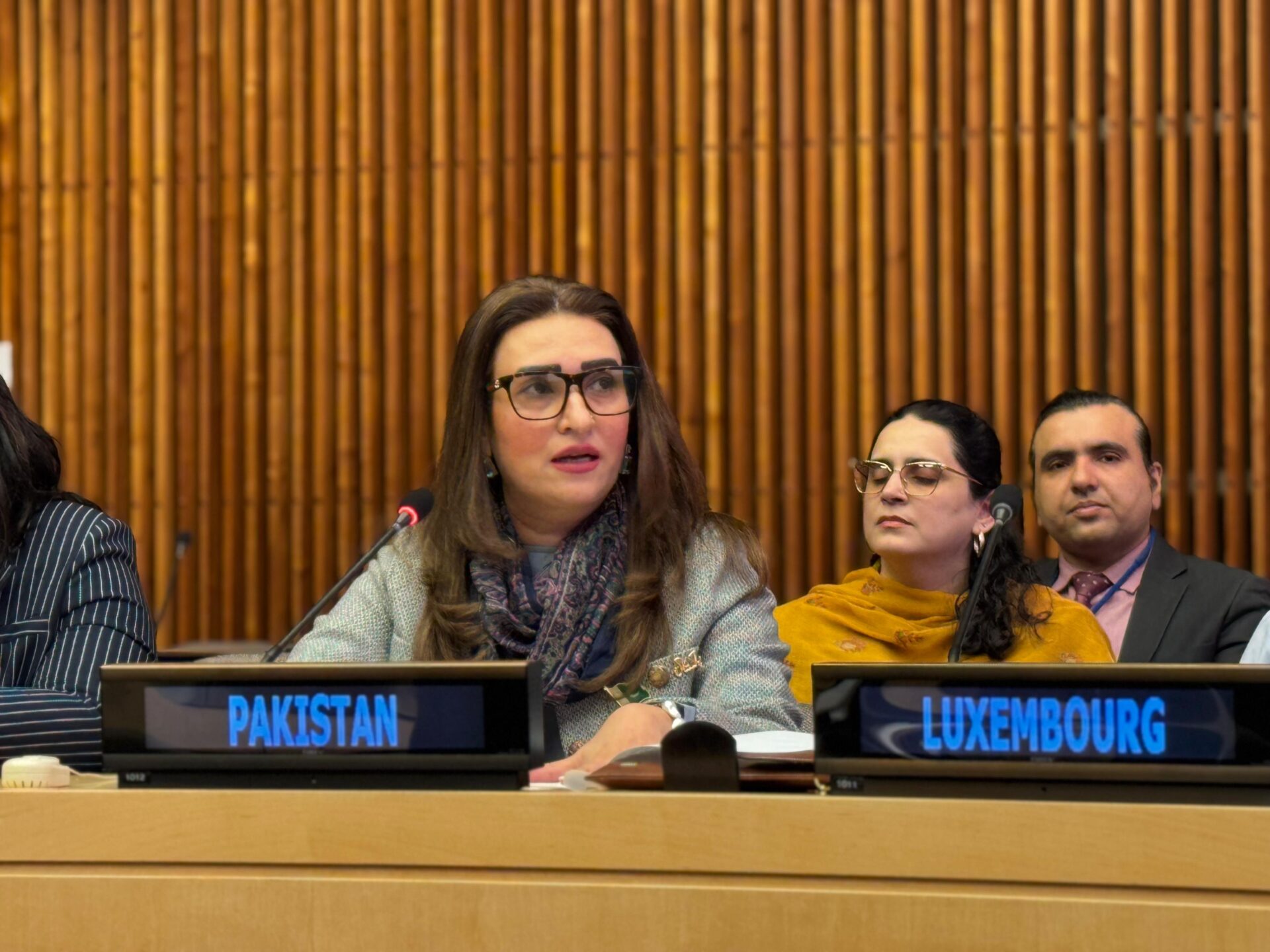
United Nations, March 11, 2026(Ghufran): Senator Bushra Anjum Butt has underscored Pakistan’s parliamentary initiatives to expand women’s access to justice and increase their participation in decision-making, urging legislatures worldwide to back legal reforms with strong oversight, adequate funding, and gender-sensitive institutions. Speaking at the Inter-Parliamentary Union (IPU) and UN Women Parliamentary meeting during the 70th Session of the Commission on the Status of Women (CSW), Senator Bushra emphasized that access to justice is a core requirement for gender equality. She noted that women and girls across the world continue to face systemic barriers in justice systems, reinforced by discriminatory social norms, economic inequality, and institutional constraints, which disproportionately affect marginalized and vulnerable groups.
Focusing on access to justice and intersectional approaches, Senator Bushra highlighted Pakistan’s parliamentary role in strengthening protections for women. She outlined key legislation addressing gender-based violence and discriminatory practices, including laws on honour crimes, workplace harassment, anti-women practices, and sexual violence.
She also highlighted institutional measures complementing legal reforms:
• 480 anti gender-based violence courts established nationwide
• Strengthened legal aid mechanisms
• Anti-rape crisis centers and shelter homes for survivors
“These initiatives aim to provide victim- and survivor-centered support and ensure timely justice,” she said.
Senator Bushra stressed that passing laws is not enough and sustained institutional effort is needed to ensure implementation. She emphasized that parliaments must strengthen oversight of justice institutions, ensure adequate budget allocations, and promote accountability.
She offered three key recommendations in this regard:
1. Regular review of national laws to repeal discriminatory provisions and align legislation with international human rights commitments.
2. Strengthen parliamentary oversight to improve enforcement and accountability for gender-based violence.
3. Increase resources for legal aid, victim support services, and gender-sensitive justice mechanisms.