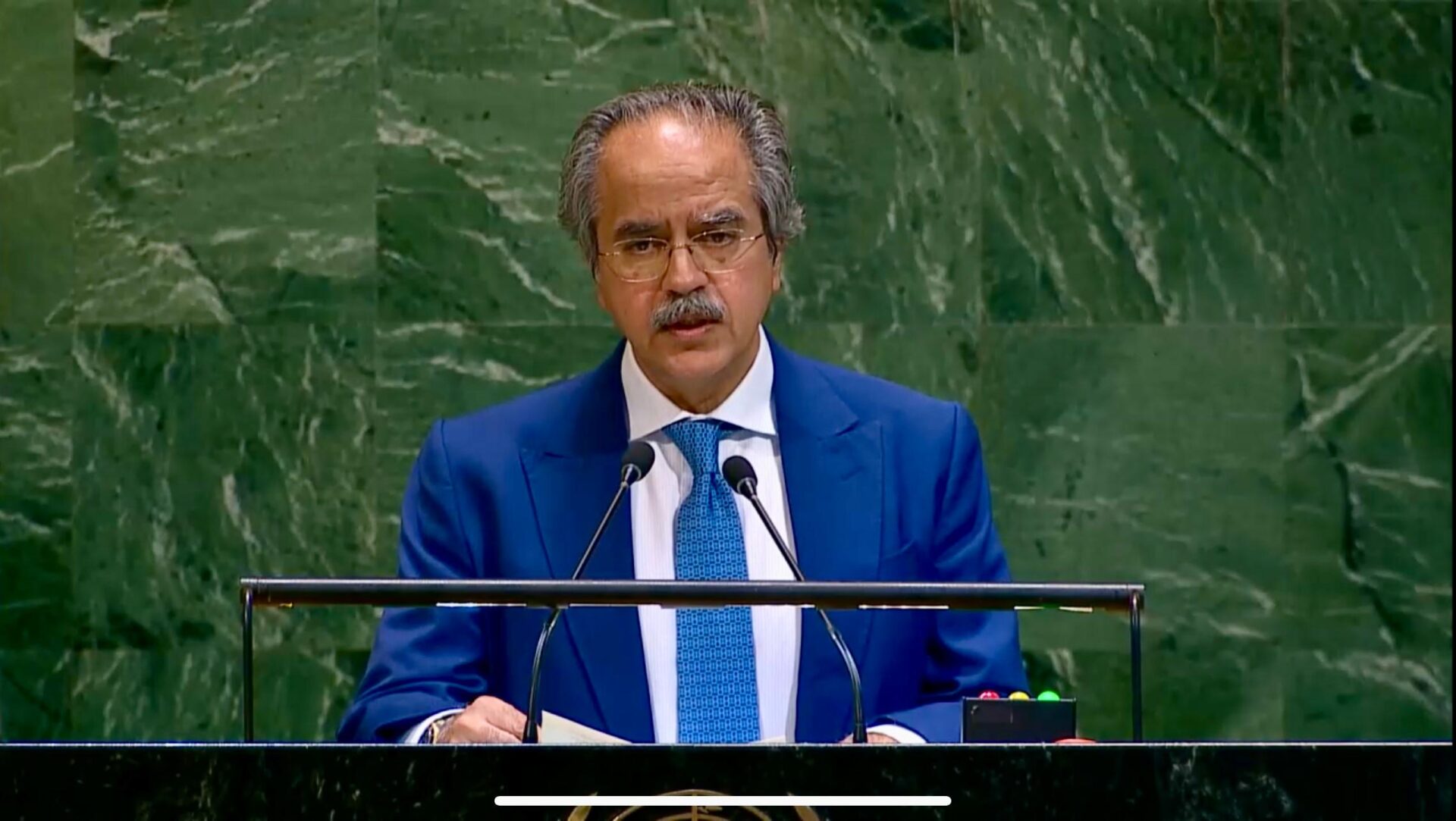
United Nations, September 30, 2025(Kamran Raja): Calling the plight of Rohingya Muslims “one of the most urgent humanitarian and human rights challenges,” Pakistan has urged the international community to translate pledges of solidarity into concrete action to end the crisis. Speaking at the High-Level Conference on the Situation of Rohingya Muslims and Other Minorities at the UN General Assembly, Ambassador Asim Iftikhar Ahmad, Pakistan’s Permanent Representative to the United Nations, aligned with the statement delivered on behalf of the OIC and underscored the urgent need for action.
He reminded delegates of the decades-long displacement, denial of rights, and the recent upsurge of violence in Myanmar’s Rakhine State, which have collectively worsened the plight of the Rohingya – forcing thousands more into flight and aggravating an already dire humanitarian emergency. Acknowledging the extraordinary generosity of Bangladesh and other host countries, the Ambassador highlighted the immense burden borne by them. Stressing that Pakistan itself has hosted millions of refugees, he called on the international community to demonstrate equal solidarity and urgency in alleviating the Rohingya crisis.
Ambassador Asim emphasized that a durable solution lies in addressing the root causes – beginning with the full implementation of the Advisory Commission’s recommendations, particularly pathways to citizenship. He further noted that only an inclusive, Myanmar-owned process, supported by ASEAN, could ensure conditions for the safe, dignified, and voluntary return of the Rohingya, which is essential for lasting peace and stability. Reiterating Pakistan’s principled commitment, he expressed readiness to work with all partners to alleviate humanitarian suffering and advance a political settlement.
“The true test of the international community and multilateralism will be measured by its ability to secure justice, restore dignity, and enable Rohingya Muslims and other minorities in Myanmar to rebuild their lives in peace and security,” Ambassador Asim concluded.