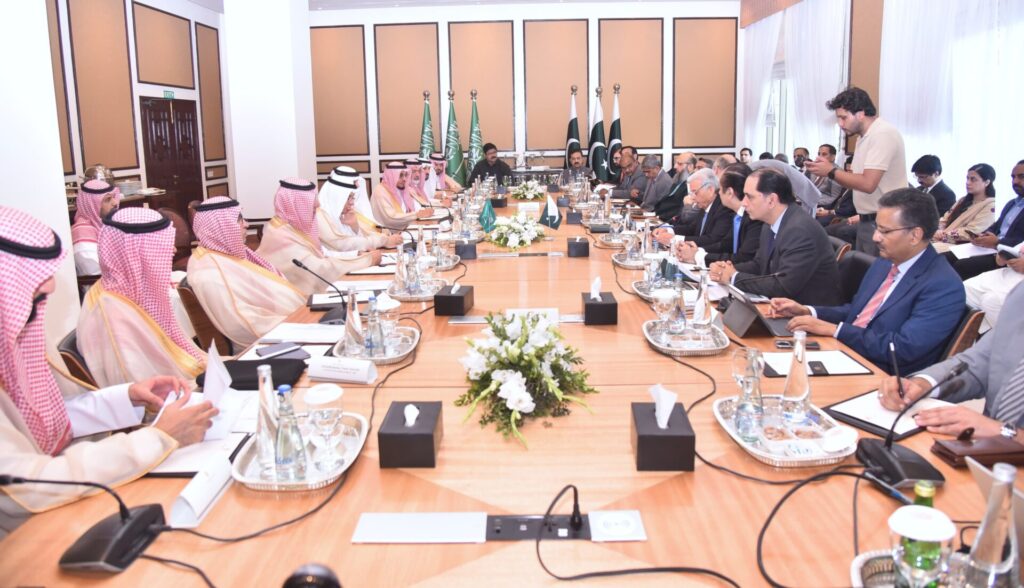
ISLAMABAD, 30 August, 2026 (Nosheen): Pakistan and Saudi Arabia have made significant progress in strengthening cooperation in agriculture and food security, following successful talks between a Saudi delegation led by Minister of Environment, Water and Agriculture Engr. Abdulrahman A. Al-Fadley and Pakistan’s Ministry of National Food Security and Research under the patronage and personal interest of Prime Minister Muhammad Shehbaz Sharif. The two sides issued a joint statement following the Saudi ministerial delegation’s visit to Islamabad from August 26 to 28, 2026, during which the sides discussed a wide range of areas for enhanced bilateral cooperation, investment and trade in the agriculture and food sectors. Prime Minister Muhammad Shehbaz Sharif also met the Saudi delegation and discussed potential areas of cooperation.The Pakistani delegation was led by Federal Minister for National Food Security and Research Rana Tanveer Hussain and included Secretary Commerce Jawad Paul, Secretary National Food Security and Research Aamir Ali Ahmed, Prime Minister’s Coordinator for Agriculture and Food Security Ahmed Umair, and representatives of Pakistan’s rice, red meat, processed food/fruit concentrate and green fodder sectors. During the visit, the Saudi delegation was briefed on the Pakistan-Saudi Arabia Agriculture and Food Strategic Plan. It also held meetings with the Special Investment Facilitation Council (SIFC), Fauji Foundation and the Pakistan-Saudi Arabia Agri-Business Forum, besides visiting the National Agricultural Research Centre (NARC).
The two sides reaffirmed the deep, historic and fraternal relations between Pakistan and Saudi Arabia that date back to 1947 and highlighted the strong alignment between Saudi Arabia’s food security priorities under Vision 2030 and Pakistan’s agricultural and food export potential. Both countries expressed a shared commitment to increasing Pakistan’s agricultural and food exports to Saudi Arabia to $3 billion within the next two years. For achieving the target, rice, red meat, fruits and fruit concentrates, green fodder and water-efficient agricultural technologies were identified as priority areas, with a particular focus on collaboration with the Saudi private sector. Regarding rice, the two sides noted that Pakistan supplied around 169,000 tonnes of rice worth approximately $163 million to the Saudi market in 2025. The Saudi side expressed interest in further expanding bilateral rice trade in the coming years. In the red meat sector, the two sides reviewed Pakistan’s annual supply of around 30,000 tonnes of red meat valued at approximately $167 million. The Saudi delegation expressed interest in gradually doubling imports of red meat from Pakistan.The two sides also identified significant potential for increasing Pakistan’s share in the Saudi fruit and fruit concentrate market. They encouraged measures to facilitate business-to-business linkages and matchmaking between the private sectors of the two countries, as well as mutual recognition of quality certifications.
The Saudi side described green fodder as a promising area for expanding trade and establishing long-term supply partnerships. Both sides welcomed the successful completion of the first phase of a water-efficient irrigation programme in Bhakkar, Punjab, and expressed interest in the proposed second phase aimed at benefiting small-scale farmers. The Saudi delegation also encouraged Pakistan to join the International Dates Council, a proposal welcomed by the Pakistani side. The two countries further reviewed investment proposals presented by Pakistan’s private sector in livestock, agri-food processing and the rice value chain and agreed to continue coordination to explore and advance these opportunities. Both sides reaffirmed their broader strategic partnership and welcomed the invitation to participate in the 43rd Saudi Agriculture Exhibition, scheduled to be held in Riyadh from October 19 to 22, 2026. The two sides expressed satisfaction with the outcomes of the visit and agreed to maintain close coordination to translate the understandings reached into concrete measures and mutually beneficial cooperation in agriculture, food security, trade and investment.