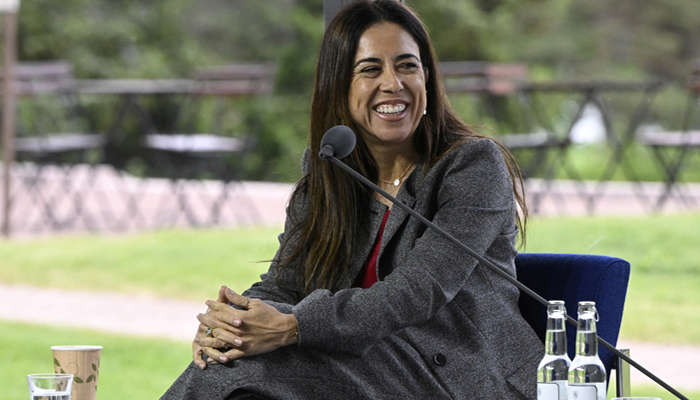
DUBAI, 24 October, 2026 (Kamran Raja): Emirati diplomat Lana Nusseibeh, an official of Palestinian origin, has emerged as a leading contender in the race to become the next United Nations secretary-general, campaigning on a reform-focused agenda and pledging to strengthen international efforts for peace and human rights. Following her official nomination on Wednesday, she has secured the backing of Gulf states, strengthening her position in the competition for the UN’s top post. If elected, Nusseibeh would become the first woman and the second Arab to hold the position, marking a major diplomatic achievement for the United Arab Emirates (UAE). In a campaign video, she pledged to bring greater urgency to peace efforts and defend human rights. Emirati political science academic Abdulkhaleq Abdulla described her as an experienced diplomat with an impressive professional record who represents the strengths of UAE diplomacy. Nusseibeh stepped down from her position as a state minister at the UAE Foreign Ministry and as the country’s envoy to the United Nations and the European Union to focus on her campaign. She previously served as the UAE’s permanent representative to the UN from 2013 to 2024, becoming the first woman to hold the post. Nickolay Mladenov, the high representative for Gaza under the US-backed Board of Peace, praised her determination, saying she remained persistent even in difficult diplomatic discussions without overwhelming others.
Nusseibeh belongs to a prominent Palestinian family whose members were displaced following the establishment of Israel in 1948. Her family traditionally held the keys to the Church of the Holy Sepulchre in Jerusalem’s Old City. Her grandfather served as Jordan’s defence minister in the 1950s and was among the early Palestinians to establish contact with Israelis. Her father, Zaki Nusseibeh, served as an adviser and interpreter to the UAE’s founding president, Sheikh Zayed bin Sultan Al Nahyan, and currently serves as a cultural adviser to the UAE president. Lana Nusseibeh has two sons and holds two master’s degrees, including one in Israeli and Jewish diaspora studies from the University of London. However, the race for the UN’s top position remains highly competitive. In the latest informal straw poll conducted last week, all candidates received at least two vetoes, highlighting the challenges facing each contender. Five of the 15 members of the UN Security Council hold veto powers, allowing them to block candidates they consider unacceptable. The outcome of the selection process will depend on whether any candidate can secure sufficient support among Security Council members to advance towards formal appointment.