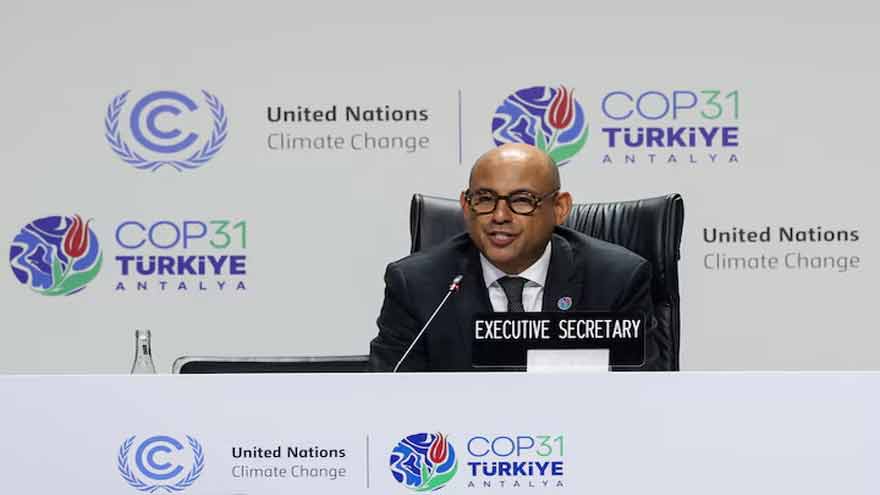
Antalya, 14 November, 2026 (Nosheen): United Nations climate chief Simon Stiell has urged delegates attending the COP31 climate conference in Türkiye to accelerate negotiations and avoid unnecessary delays as the summit enters its second and final week. Addressing the conference on Saturday, Stiell stressed that reaching a meaningful agreement would require compromise from all participating countries, acknowledging that negotiations over every provision remained challenging but essential. He called on delegates to address the most difficult issues without resorting to tactical delays. The talks are facing growing challenges as global conflicts, inflation and other international crises compete with climate change for governments’ attention. Major fossil fuel producers and consumers are reportedly resisting proposals that would introduce binding targets or establish a clear transition away from oil, gas and coal. The disagreement has created difficulties for summit host Türkiye and Australia’s lead negotiator in securing an ambitious climate agreement. A United Nations report released last month warned that global temperatures are already on track to exceed the 1.5-degree Celsius threshold, which scientists consider critical for avoiding the most severe consequences of climate change. Australia’s COP31 President of Negotiations Chris Bowen said the first draft of the proposed agreement was expected early next week. Meanwhile, Türkiye is seeking to make a global electrification initiative a central part of the final agreement. The proposal aims to accelerate the replacement of fossil fuel-powered vehicles, heating systems, industrial furnaces and other equipment with electric alternatives. However, the plan does not require electricity to be generated from renewable sources, raising concerns among climate campaigners and several delegations seeking stronger commitments to phase out fossil fuels. Major oil-producing countries, including Saudi Arabia and Russia, have traditionally opposed measures restricting fossil fuel use, while developing economies such as India have raised concerns that strict climate commitments could limit their economic growth and energy choices. The United States has also skipped the conference for the second consecutive year under President Donald Trump, who has repeatedly dismissed concerns over global warming and supported continued fossil fuel production. Asked about the progress of negotiations, Stiell described discussions as constructive, while acknowledging that significant differences remained between participating countries.