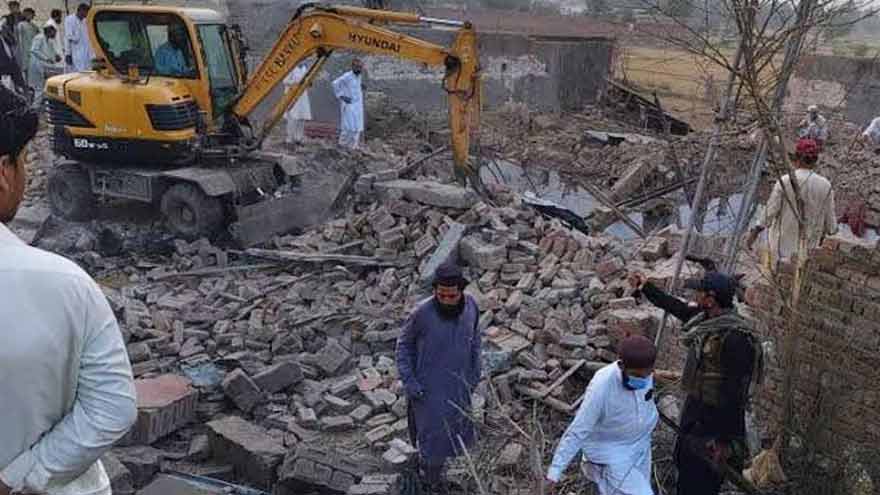
Islamabad, 11 October, 2026 (Kamran Raja): Terrorism incidents in Khyber Pakhtunkhwa have increased by 195 percent over the past two years, according to two special security reports presented by KP Police and intelligence agencies at a meeting chaired by the prime minister. The reports described the sharp rise in terrorist attacks as a serious security challenge and highlighted the presence of terrorist elements in Afghanistan, local facilitators and gaps in provincial counterterrorism measures as contributing factors. According to the reports, terrorism incidents increased by 195 percent between March 1, 2024, and September 23, 2026, while links between terrorist networks, local facilitation and illegal activities continued to pose significant security concerns. Police and security agencies were targeted in 73 percent of terrorist attacks recorded in 2026. The reports also highlighted a significant increase in the use of drones by terrorist elements. While no drone attacks on police and security agencies were reported in 2024, the number of such attacks reached 170 in 2026, according to the reports. Improvised explosive device attacks also remained a major concern, with 181 incidents recorded in 2025 and 159 reported by September 2026. The reports stressed the urgent need to strengthen police and law enforcement capabilities to respond to evolving terrorist tactics. They noted that the Safe City project remained limited to Peshawar despite growing security challenges across the province. More than 9,000 posts in the KP Police remain vacant, while the police and Counter Terrorism Department face shortages of modern weapons, operational equipment, surveillance systems, night-vision devices and thermal-imaging technology. The reports also highlighted a lack of armoured vehicles in terrorism-affected southern districts, saying the shortage had weakened police mobility and operational effectiveness. Police personnel in the merged districts were reported to face deficiencies in training, resources and operational capacity. The Counter Terrorism Department, despite its specialised role, was also facing a shortage of trained personnel and continued to rely on regular police for manpower. In addition, its district offices, operational facilities and specialised infrastructure were described as inadequate to meet growing security requirements. The cabinet committee expressed serious concern over rising terrorism, institutional weaknesses and governance-related issues in Khyber Pakhtunkhwa. The reports reviewed shortcomings in security agencies’ capabilities, provincial preparedness and counterterrorism measures, while emphasising the need for stronger institutions, improved resources and effective coordination to address the deteriorating law and order situation.