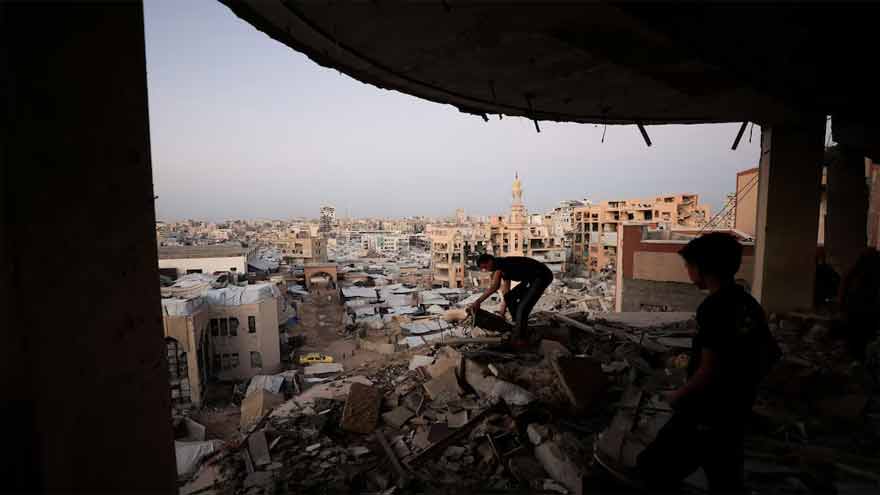
GENEVA, 9 October, 2026 (Ghufran): Nearly all residents of Gaza require tents or other shelter assistance ahead of winter, as the El Niño weather phenomenon is expected to bring heavier rainfall and increase the risk of flooding, the UN migration agency said on Friday. The International Organization for Migration (IOM) warned that the weather conditions could further weaken already unsafe buildings and trigger flooding because of the enclave’s severely damaged drainage systems. According to IOM Director General Amy Pope, nearly two million people in Gaza, much of which has been devastated by the war launched by Israel in response to Hamas’ October 2023 attack, require humanitarian assistance. However, only around 17 percent of the identified needs for winter shelter supplies have been met by humanitarian organizations. Pope said families who had endured repeated displacement and devastating losses must be able to face winter safely and with dignity, adding that restrictions imposed by Israeli authorities were making it difficult for aid agencies to expand their operations. The IOM said Israeli authorities had not permitted approximately 8,600 emergency shelter kits, containing wood, tarpaulins and basic materials, to enter Gaza because they had been classified as dual-use items. The Israeli military body responsible for overseeing aid deliveries to Gaza, COGAT, did not immediately respond to a Reuters request for comment. Israel has cited security concerns to justify restrictions on supplies entering the enclave. The IOM said it had managed to bring in some tarpaulins and tents, but the supplies were insufficient to meet the enormous needs of Gaza’s population. More than half of the tents and makeshift shelters across the enclave need replacement because of their poor condition, leaving displaced families with few safe alternatives as war-damaged buildings pose serious risks. The agency added that more than 3,600 structures were identified in August as dangerous and at risk of collapse, while approximately 1.8 million people are living at displacement sites, most of which are located in areas vulnerable to flooding. The IOM warned that the combination of damaged infrastructure, inadequate shelter and potentially heavier winter rainfall could further endanger Gaza’s already vulnerable population.