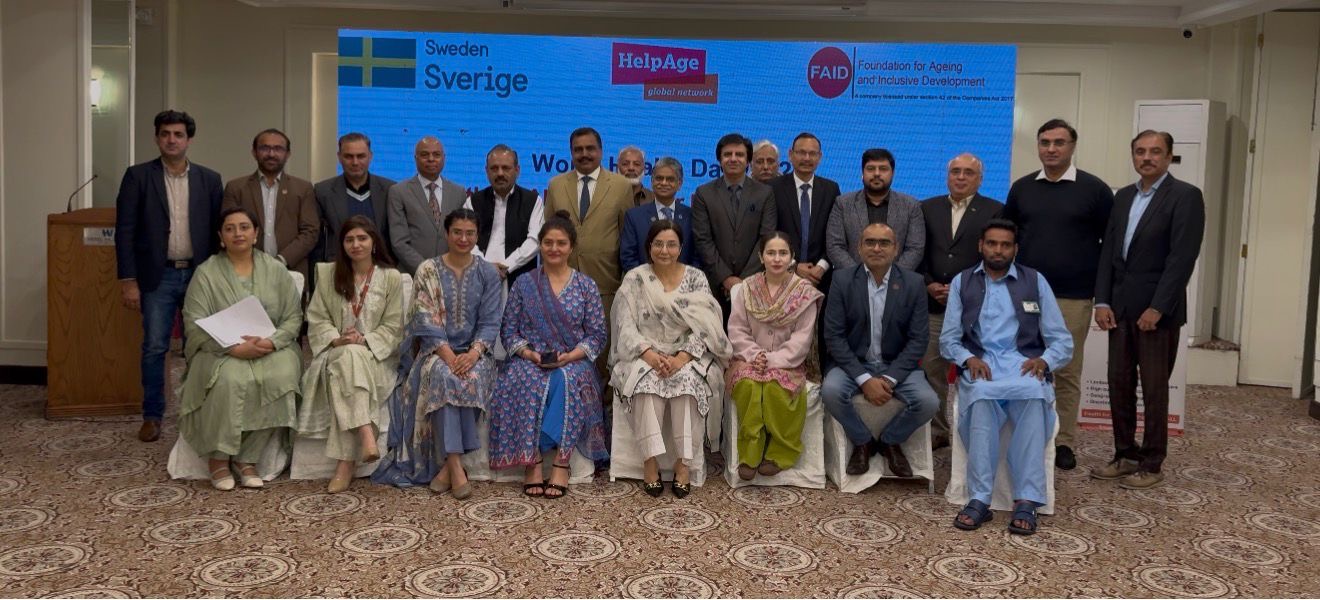
Islamabad, 08 April 2026( Kamran Raja):The Foundation for Ageing and Inclusive Development convened a national dialogue in Islamabad on World Health Day, bringing together government officials, health experts, development partners, and community representatives to discuss pathways for advancing Universal Health Coverage in Pakistan.
The dialogue focused on the need to strengthen health systems so that they are accessible, affordable, and responsive to people at all stages of life. Participants emphasized that while Pakistan has made important progress in expanding healthcare access, significant gaps remain in ensuring equitable and inclusive services particularly for older persons, persons with disabilities, and other vulnerable groups.
Dr. Shafqat Munir , in his opening remarks, highlighted that Universal Health Coverage can only be achieved through inclusive health systems that respond to the needs of people across the life course. He noted that Pakistan is experiencing a gradual demographic shift, with the number of older persons steadily increasing, yet ageing remains largely overlooked in many development and policy frameworks.
Health systems must adapt to changing demographic realities. If our systems are not inclusive, we risk leaving behind those who need care the most,” he said, emphasizing the importance of integrating ageing, inclusion, and universal health coverage into national planning.
Delivering the keynote address, Muhammad Arshad, Chief Executive Officer of the Sehat Sahulat Program, underscored the importance of expanding affordable healthcare services for all citizens. He highlighted the role of the program in providing financial protection and improving access to hospitalization services for millions of people across different provinces.
He noted that for many low-income households, healthcare costs can quickly become a major financial burden. “Accessible and affordable healthcare is not a luxury it is a basic human right. Programs like Sehat Sahulat are important steps toward protecting vulnerable populations and expanding health coverage,” he said.
The panel discussion brought together experts from the health and development sectors, including Dr. Matiur Rahman from the Health Services Academy, Siraj ul Haque Ghouri from the Pakistan Poverty Alleviation Fund, Dr. Soofia Younas, and Rabia Razzaque. The session was moderated by Dr. Aleeza Sana.
Panelists discussed key challenges affecting equitable health service delivery in Pakistan, including fragmented health financing systems, unequal distribution of resources, and limited financial protection for low-income populations. They highlighted the importance of strengthening primary healthcare systems, improving coordination between federal and provincial institutions, and expanding financial protection mechanisms for vulnerable communities.
The discussion also emphasized the importance of making healthcare facilities more accessible and responsive to the needs of older persons and persons with disabilities. Participants noted that strengthening existing systems and improving accessibility including infrastructure, early diagnosis, and community-based care can significantly improve health outcomes.
A key segment of the dialogue featured voices from the community, where older people and members of Older People Associations (OPAs) shared their experiences of accessing healthcare services. They highlighted challenges such as high out-of-pocket costs, mobility barriers, and limited availability of age-friendly services.
Participants also discussed the broader factors affecting health and well-being, including nutrition, food security, climate change, and disaster risks. It was noted that these challenges disproportionately affect vulnerable groups, particularly older persons, and require stronger coordination between health, social protection, and disaster management systems.
The dialogue concluded with a call for stronger policy attention to ageing and greater integration of inclusive approaches within Pakistan health system. Participants emphasized that achieving Universal Health Coverage will require sustained commitment, coordinated action, and inclusive planning to ensure that health services are accessible, affordable, and responsive to the needs of all communities.