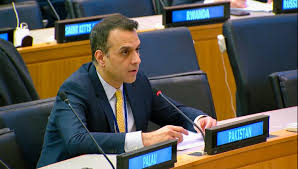
United Nations, 19 November, 2026 (Kamran Raja): Pakistan has strongly criticized India for suspending the Indus Waters Treaty and threatening downstream water supplies, accusing New Delhi of using shared water resources as a tool of political pressure and coercion. Speaking at an informal UN Security Council meeting on natural resources and conflict, Pakistan’s Deputy Permanent Representative to the United Nations, Ambassador Usman Jadoon, termed India’s move unlawful and warned that it endangered the livelihoods and well-being of more than 240 million people while increasing the risk of tensions between the two neighbouring countries. He emphasized that cooperation among neighbouring states and the peaceful settlement of resource-related disputes were essential for regional peace and stability. Referring to the Permanent Court of Arbitration, Jadoon said the court had reaffirmed that the Indus Waters Treaty remained fully in force and that India was bound by its obligations. He stressed that no country should be allowed to use shared natural resources as instruments of political pressure in violation of international law and binding agreements. The Pakistani envoy also highlighted the importance of fair resource management, international cooperation and equitable sharing of natural wealth, particularly in developing countries. During the meeting, India’s Permanent Representative, Ambassador Harish Parvathaneni, responded to Pakistan’s remarks, defending New Delhi’s position on the treaty and making comments about Pakistan’s domestic affairs. Exercising Pakistan’s right of reply, First Secretary Ansar Shah rejected India’s allegations, describing its position as an attempt to divert attention through rhetoric and baseless assertions. He maintained that India could not unilaterally suspend a binding international agreement, pointing out that the Indus Waters Treaty contained no provision permitting such action. Responding to India’s argument that circumstances had changed since the treaty was signed in 1960, Shah questioned whether India also considered the UN Charter outdated. He further criticized India’s record on Security Council resolutions concerning Jammu and Kashmir and reiterated Pakistan’s position on the rights of the Kashmiri people. Rejecting the Indian envoy’s comments on Pakistan’s internal affairs, Shah said Pakistan upheld its Constitution, rule of law and democratic principles, adding that its citizens had the freedom to choose their leaders and exercise their fundamental rights. He also criticized the Indian government’s treatment of minorities and restrictions on freedom of expression, asserting that shared natural resources must promote cooperation, sustainable development and lasting peace rather than become instruments of exploitation, inequality and conflict.