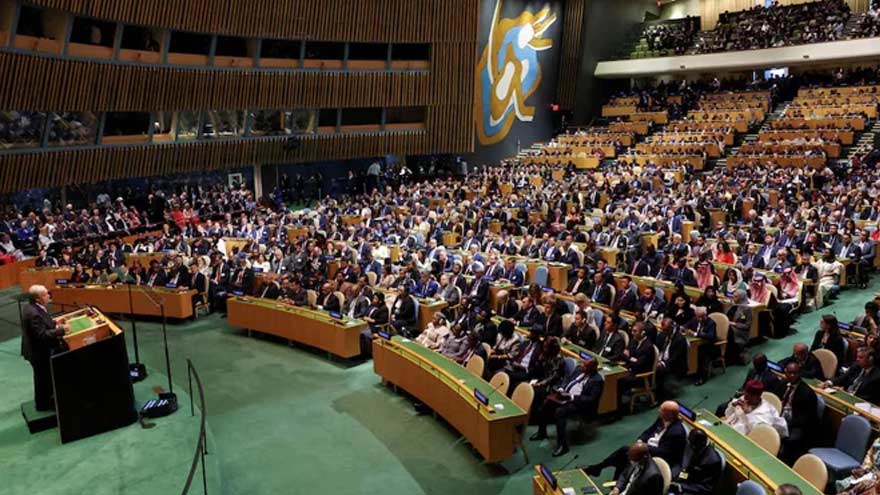
New York, 26 September, 2026 (Kamran Raja): A week of intense diplomacy at the United Nations produced no major breakthroughs on the world’s most difficult conflicts, but talks on Iran and Ukraine showed limited movement, while global leaders and technology executives also debated the risks posed by artificial intelligence. On Iran, US and Iranian officials held indirect talks through mediators, with Tehran reviewing Washington’s response to proposals involving the lifting of a US naval blockade and reopening the Strait of Hormuz, although no immediate agreement appeared likely. On Ukraine, US Secretary of State Marco Rubio said Russia and Ukraine had expressed interest in a limited ceasefire covering grain and energy-related targets, while Russian Foreign Minister Sergey Lavrov showed no clear indication that Moscow was ready to engage on such issues. Artificial intelligence emerged as a major focus at the UN, with OpenAI CEO Sam Altman and Anthropic CEO Dario Amodei calling for international cooperation to manage AI-related risks. Venezuela’s interim President Delcy Rodriguez made a surprise appearance and held her first in-person meeting with US President Donald Trump since taking office, while discussions also focused on Venezuela’s debt and oil sector. Sudanese army chief Abdel Fattah al-Burhan was notably absent after the United States withheld his visa, while Palestinian President Mahmoud Abbas addressed the General Assembly by video. The week also highlighted the challenges facing the United Nations, including financial pressures, declining influence and geopolitical divisions, as the organisation prepares for a leadership transition when Secretary-General Antonio Guterres’ second term ends on December 31.